

T Ø N S B E R G
TØNSBERG (2014) is a site-specific installation and architectural reconstruction that exposes the appropriation of Nordic history, symbols, and place names by contemporary neo-Nazi movements in Europe.
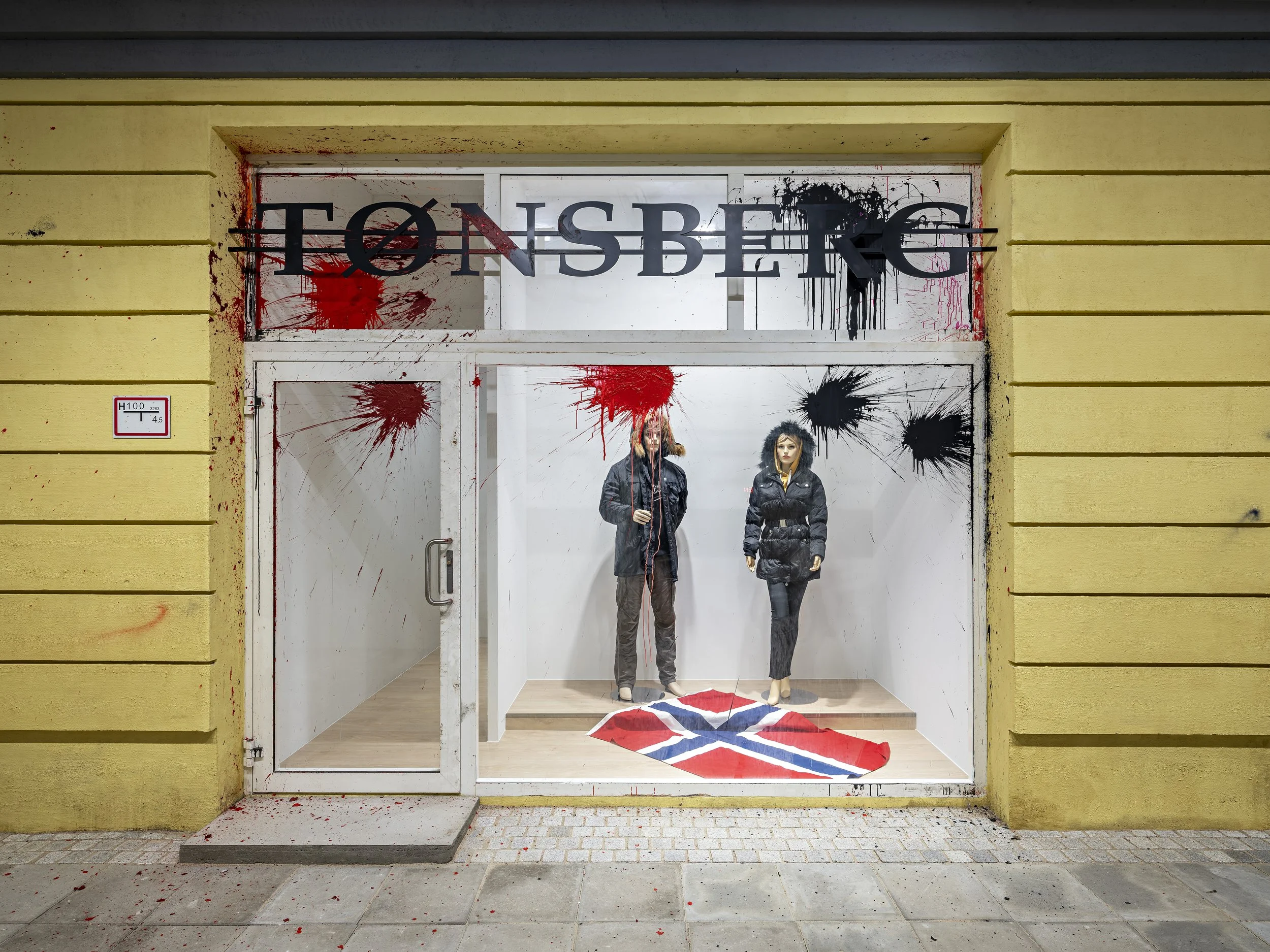
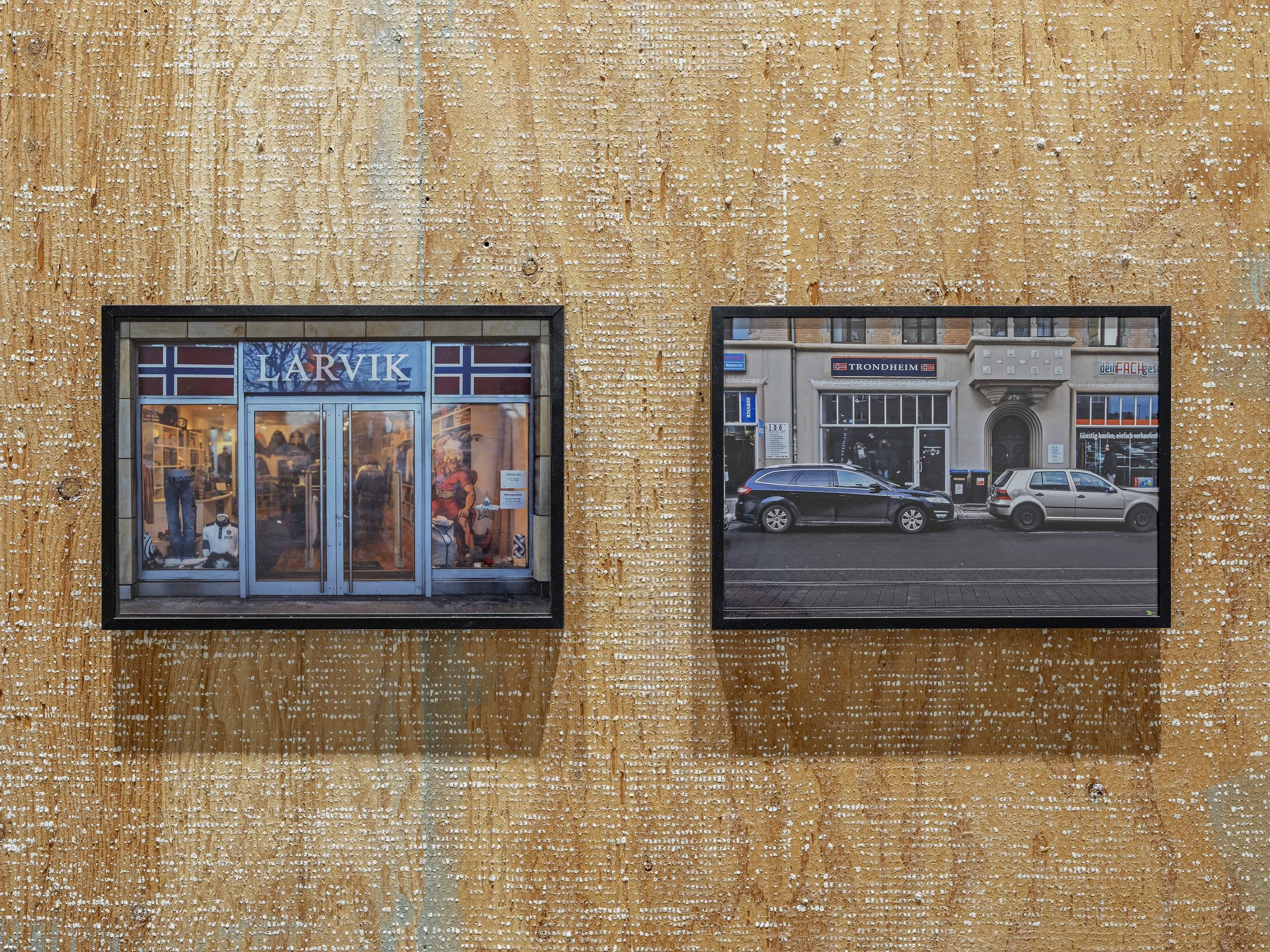
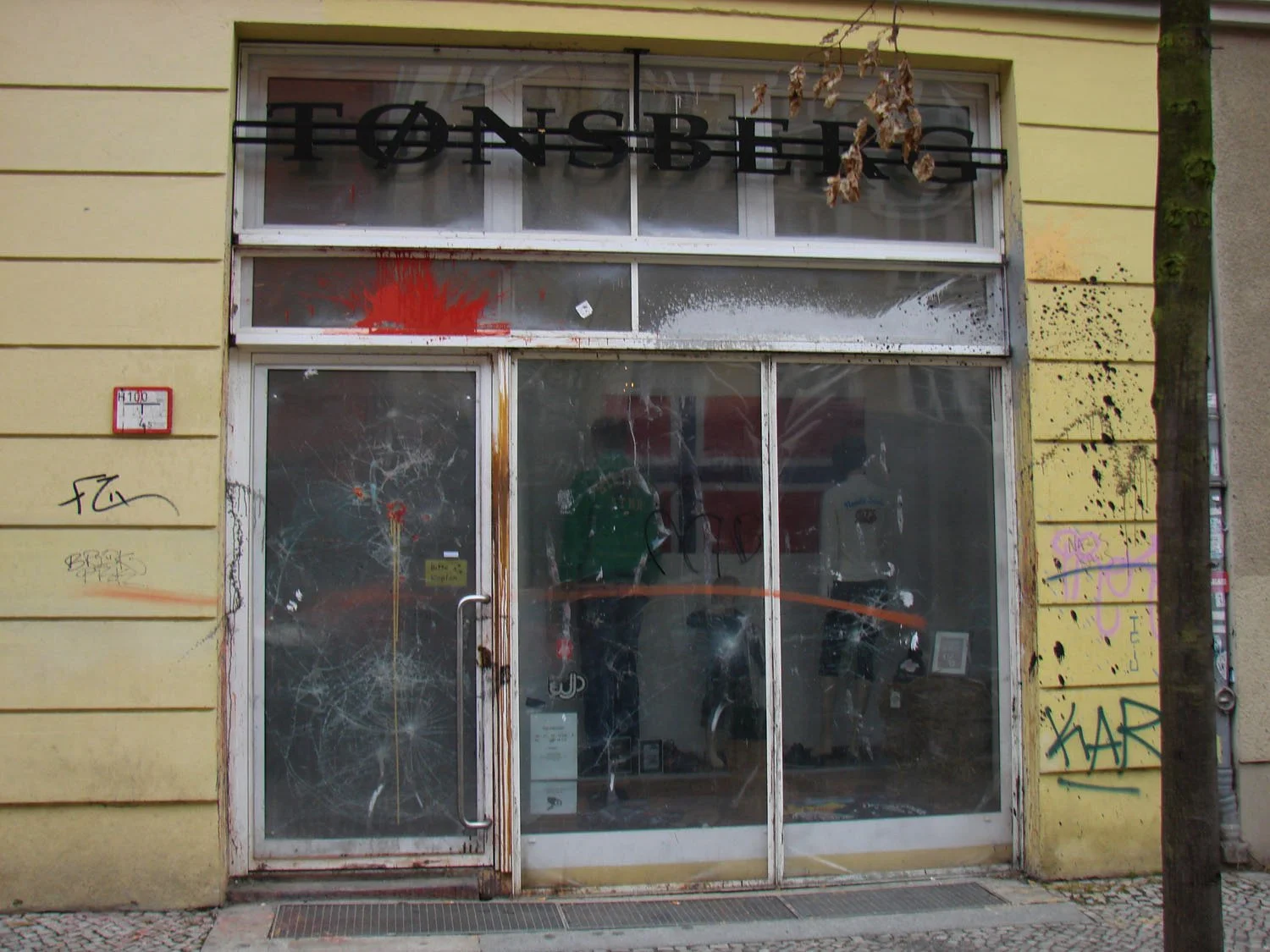
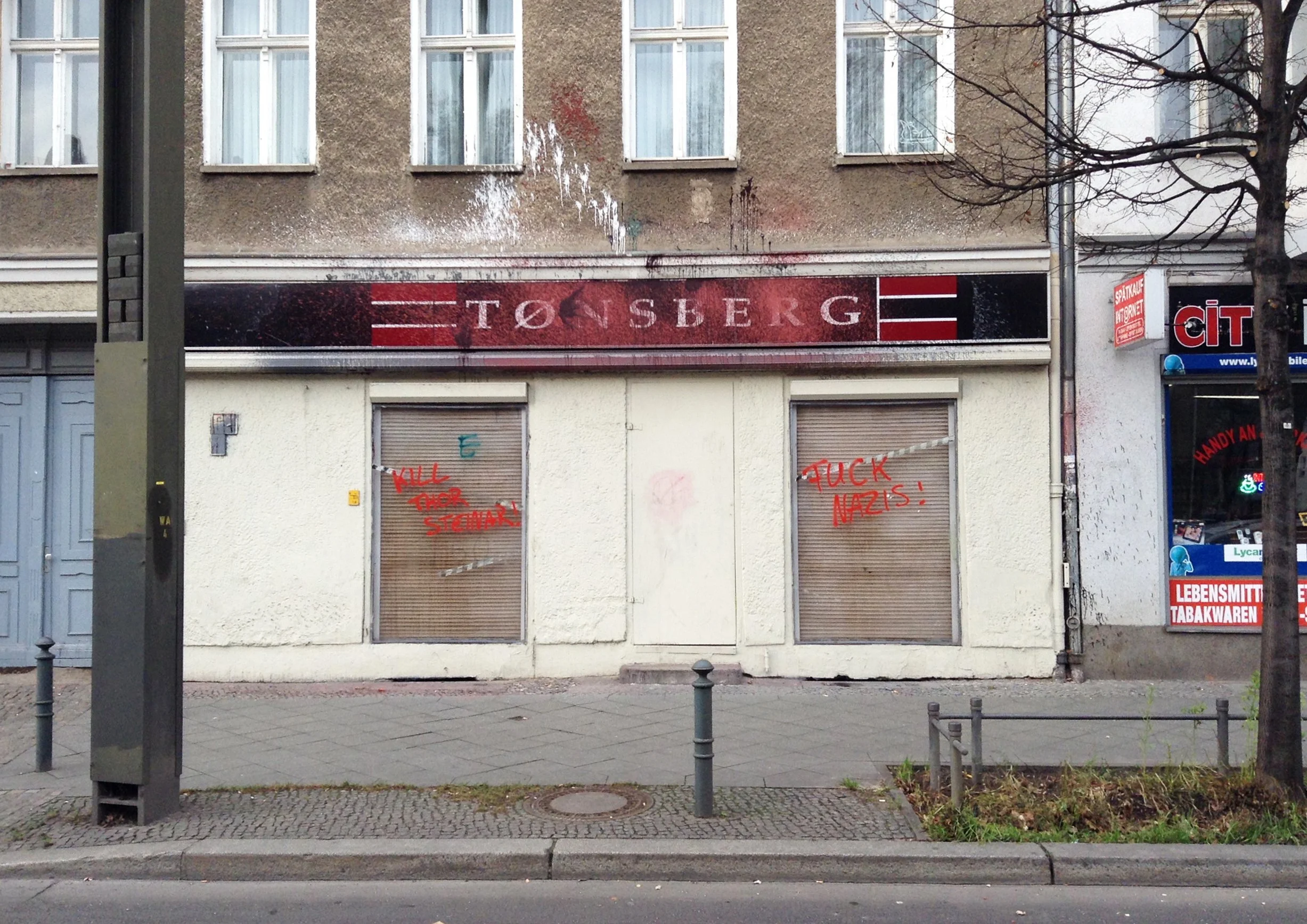
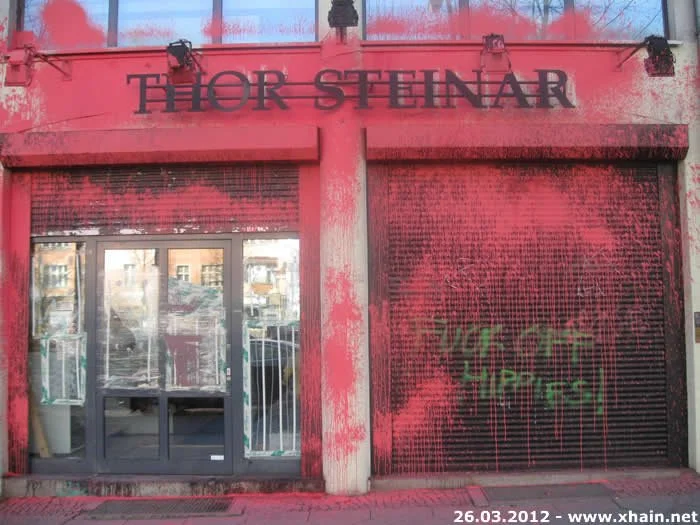
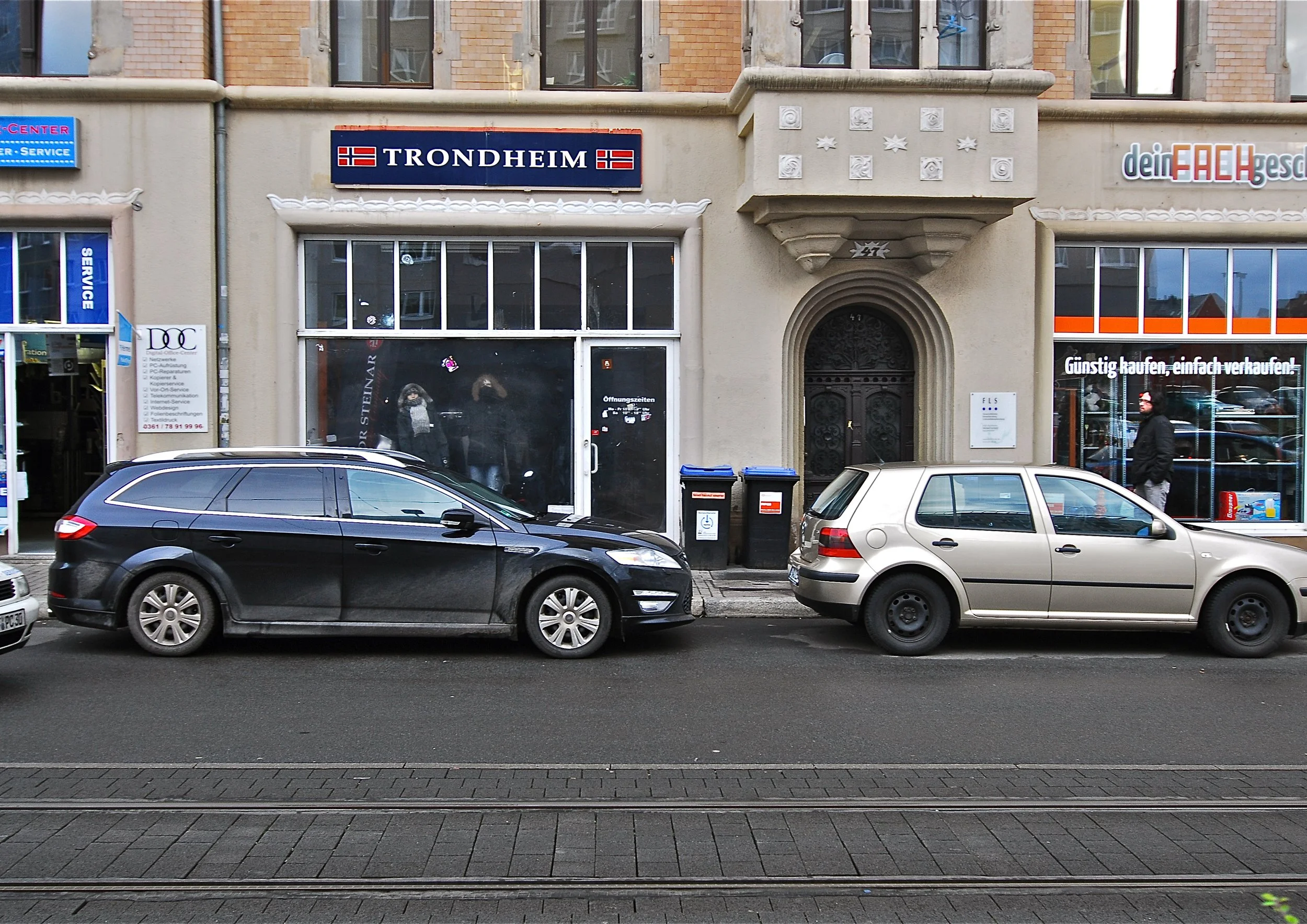
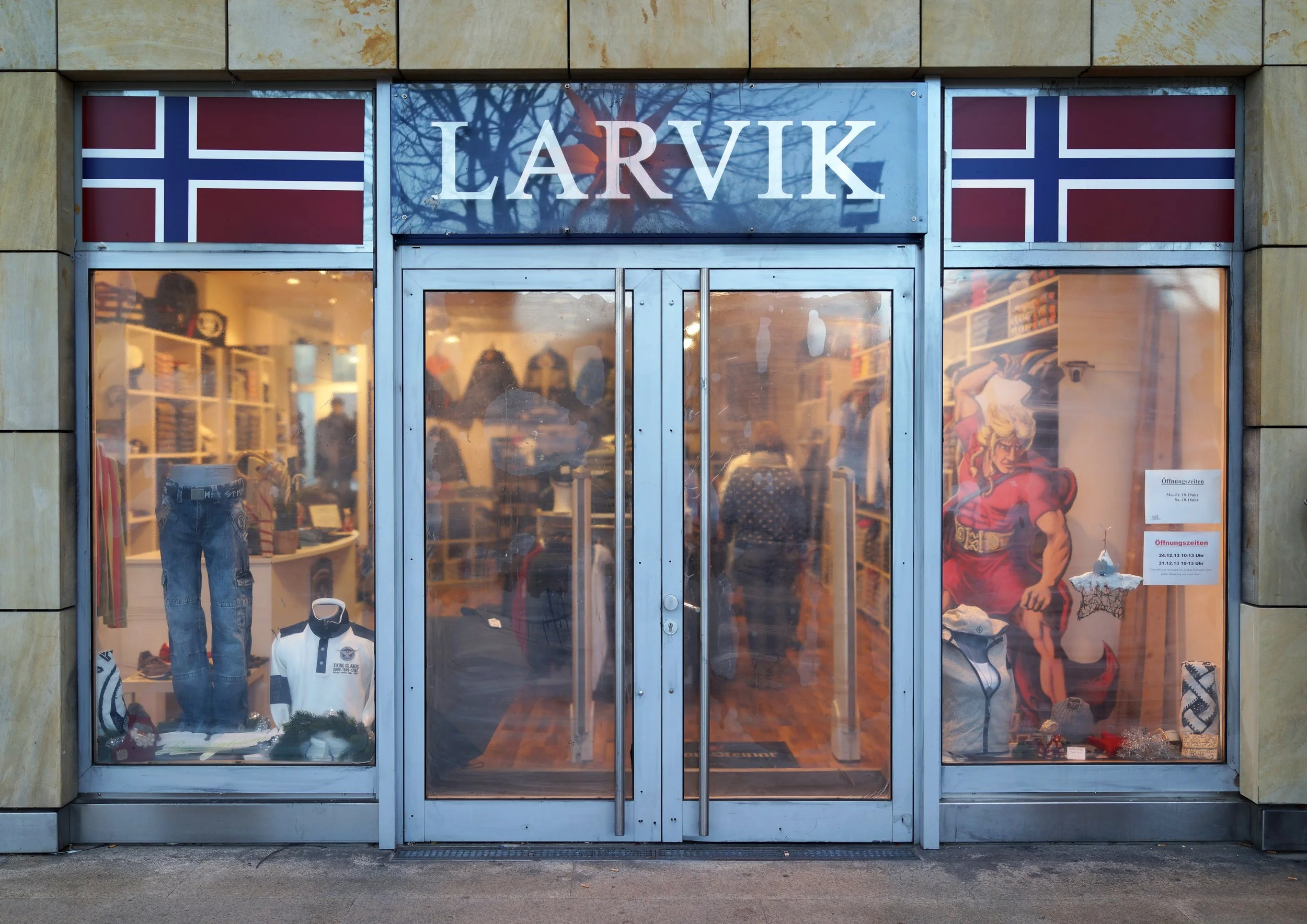
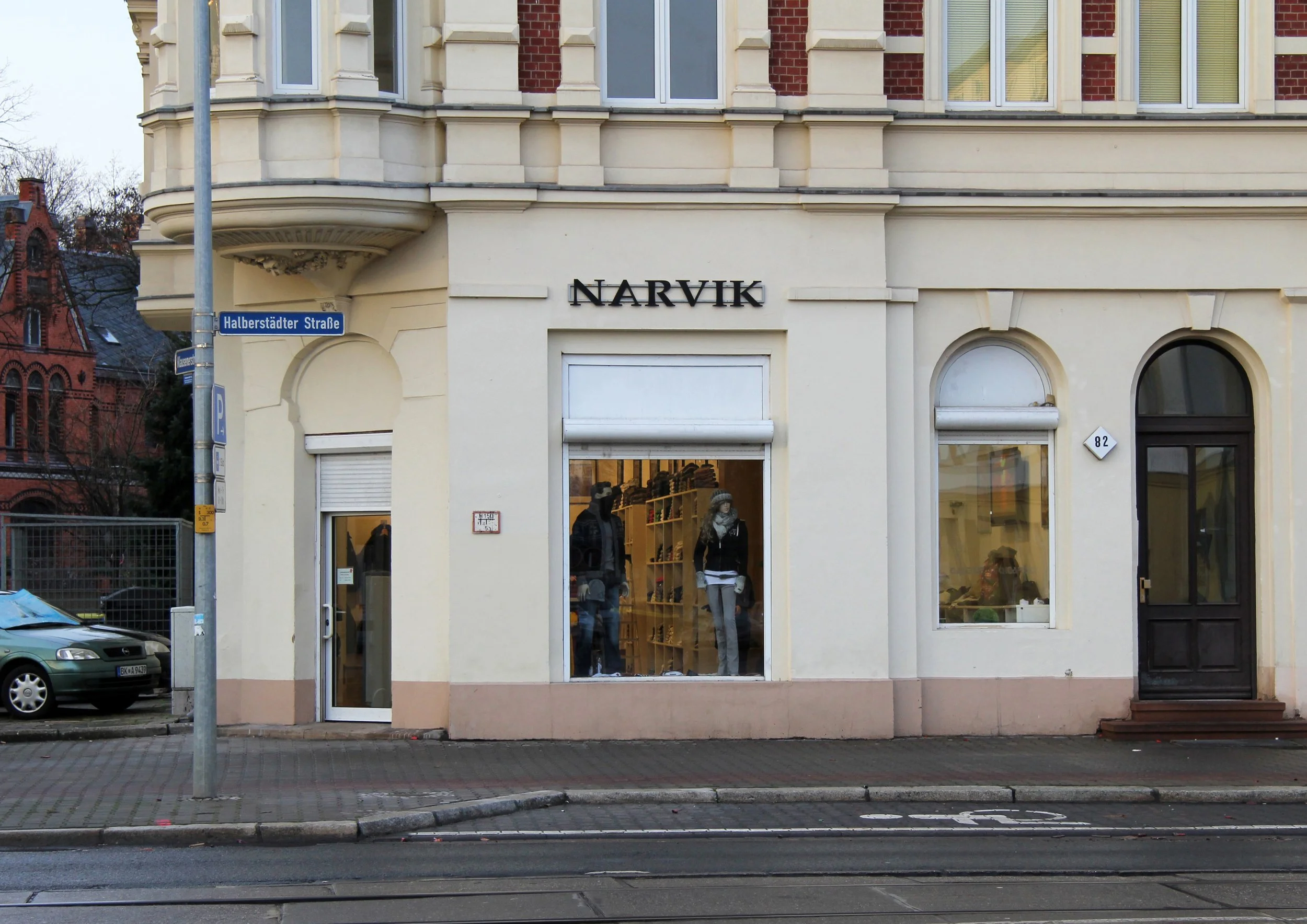
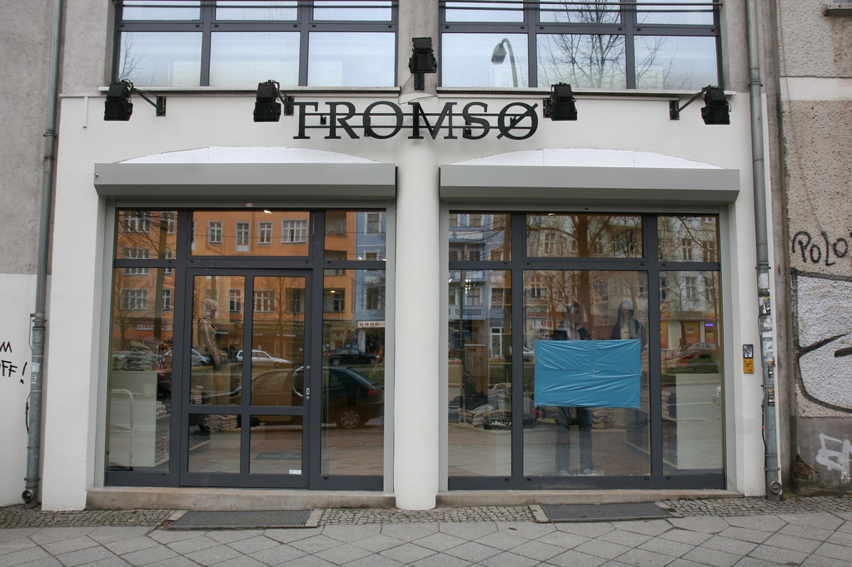
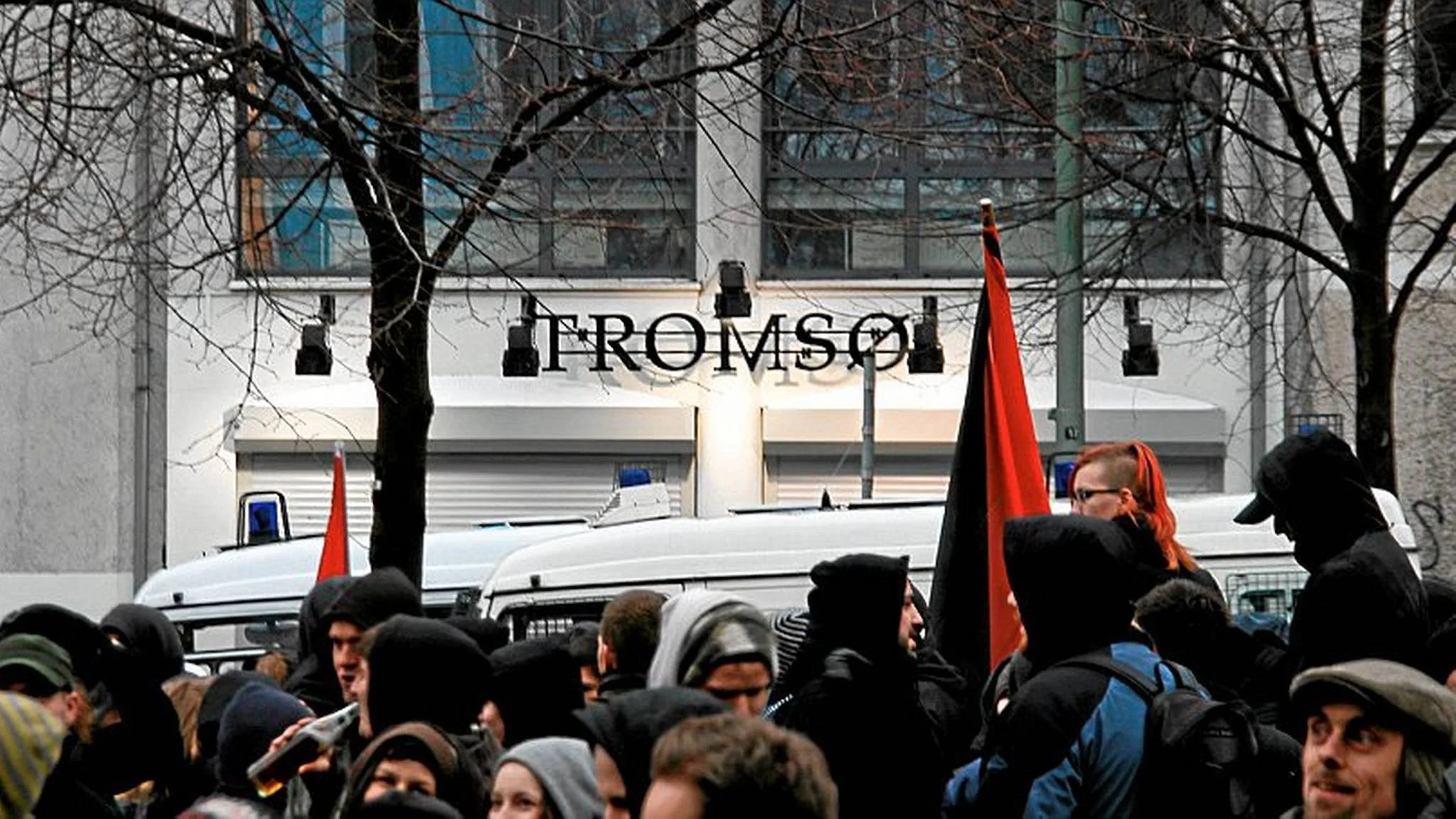
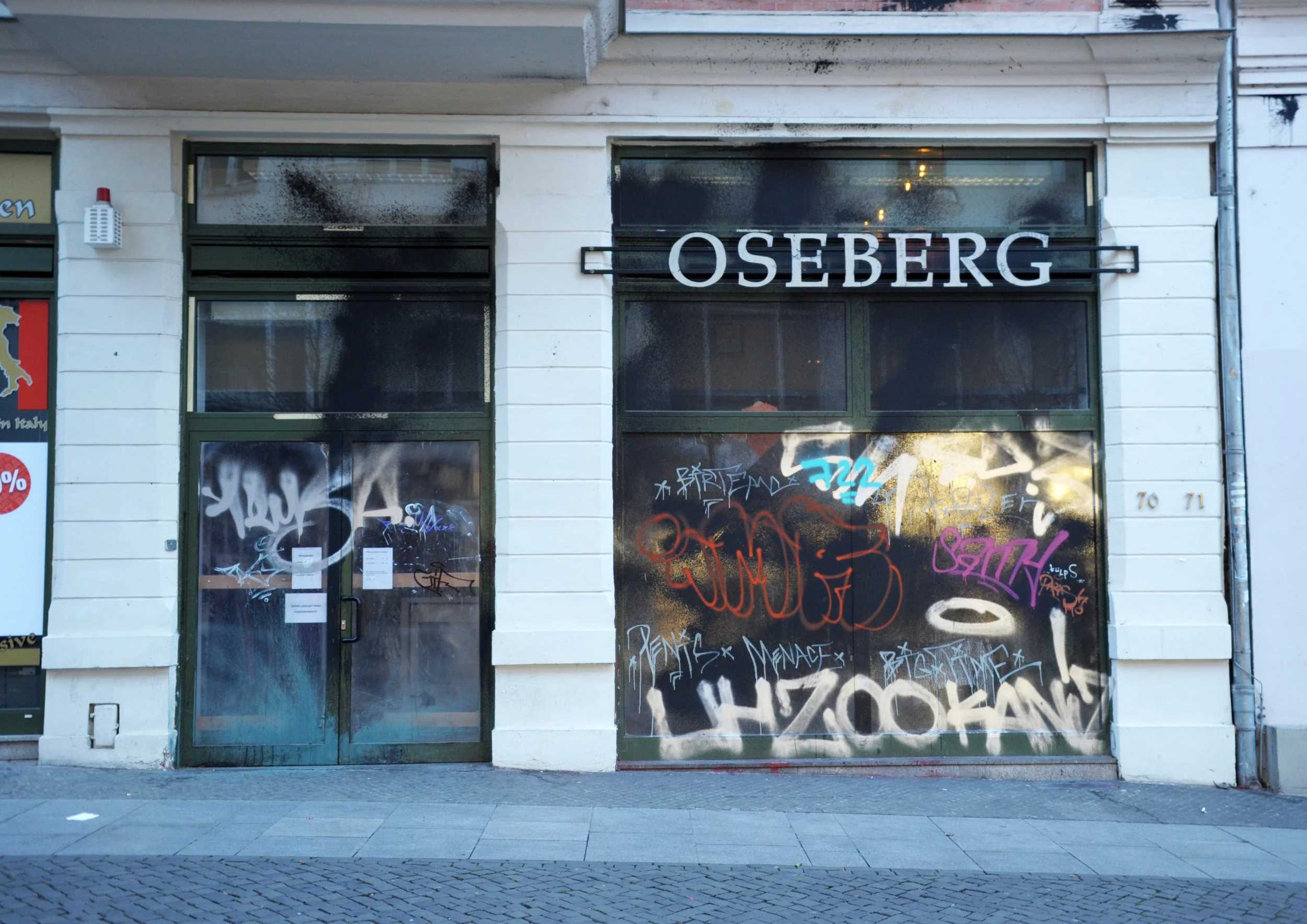
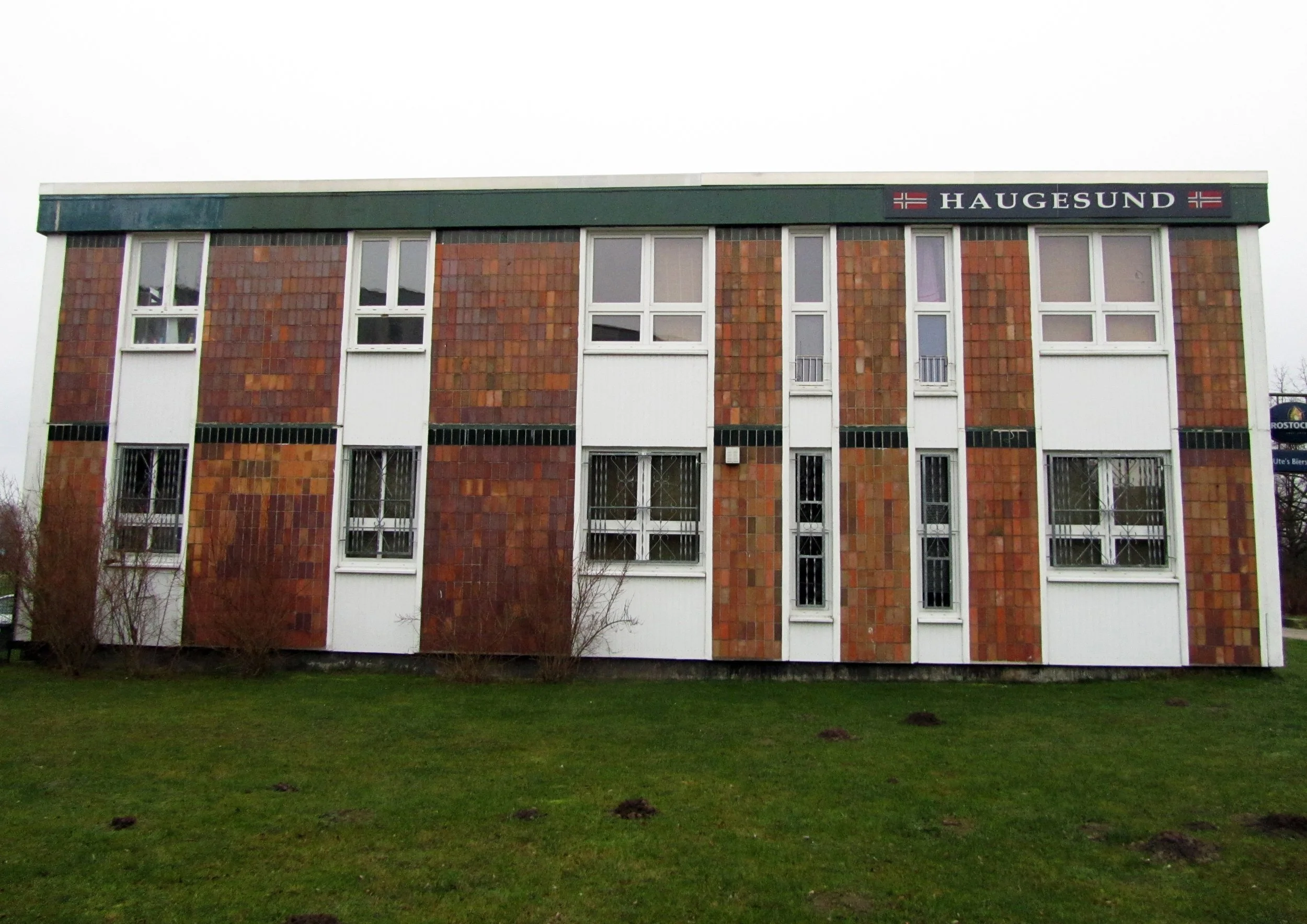
The work reconstructs the façade of the first neo-Nazi clothing store in Berlin operated by the brand Thor Steinar, which used the Norwegian town name Tønsberg as its storefront identity. The brand systematically employs Viking imagery, runes, Norwegian place names, and the Norwegian flag as part of a coded visual language aimed at far-right communities. Through this strategy, cultural heritage is transformed into a commercial and ideological vehicle for exclusionary nationalism.
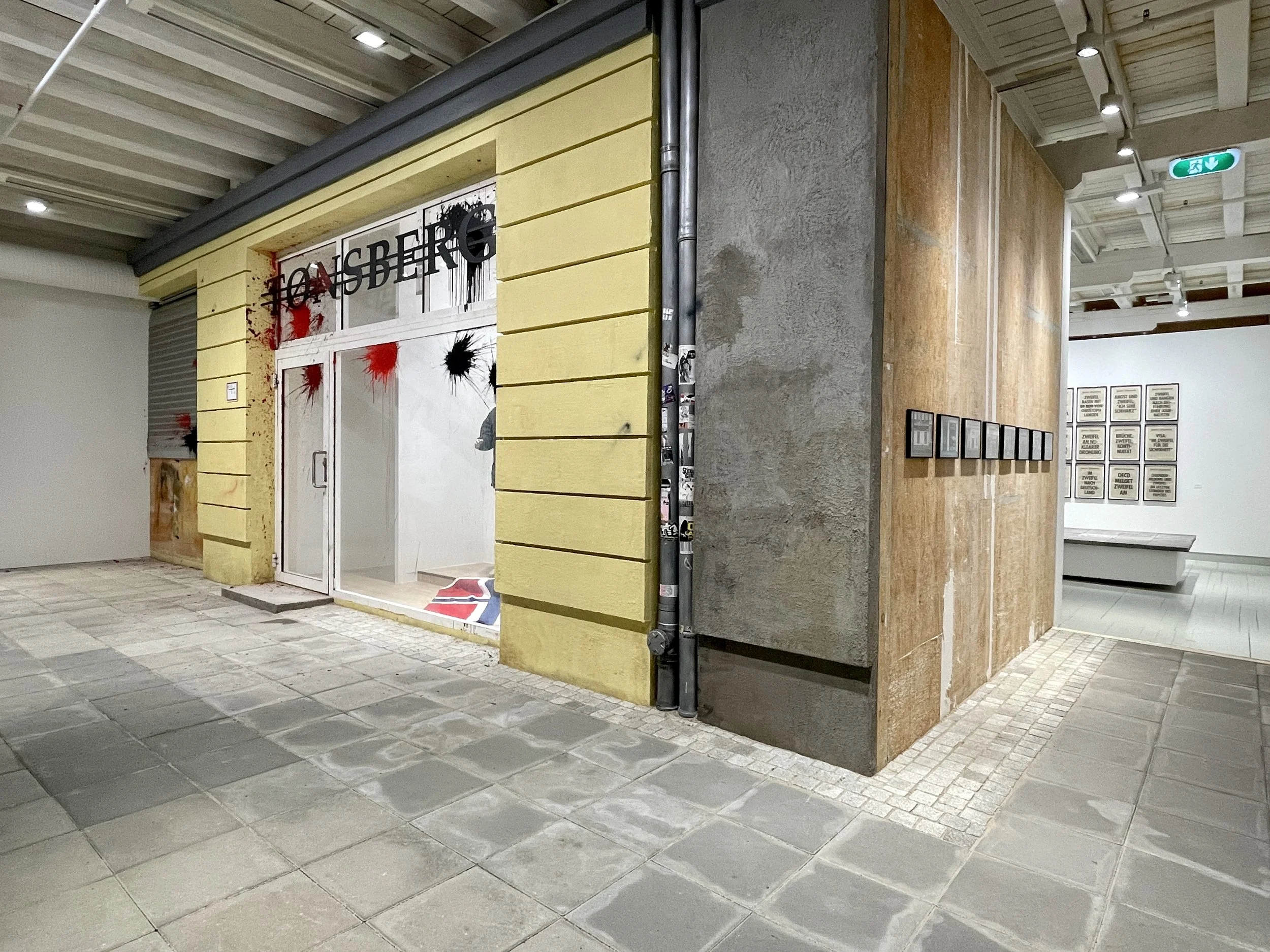
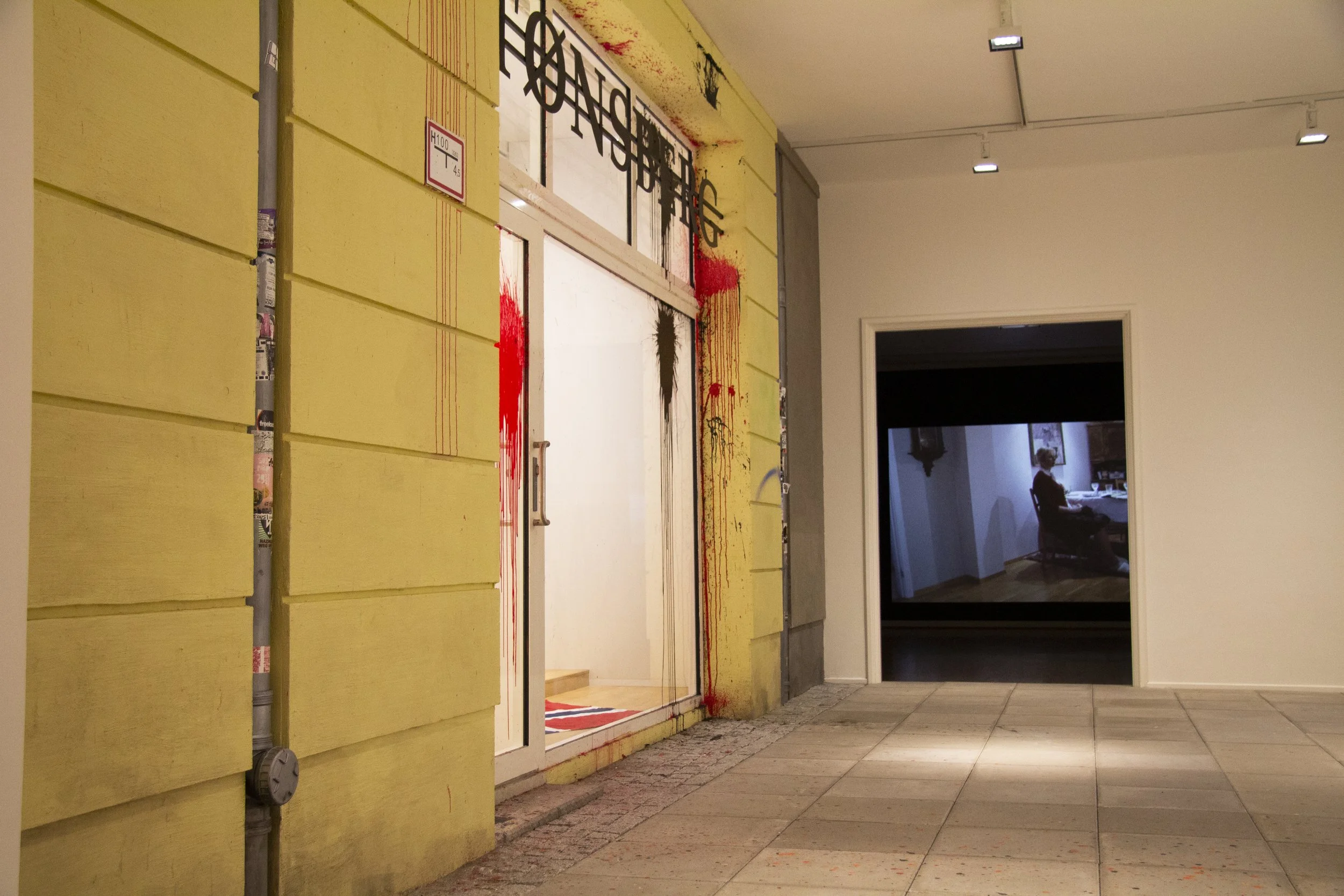
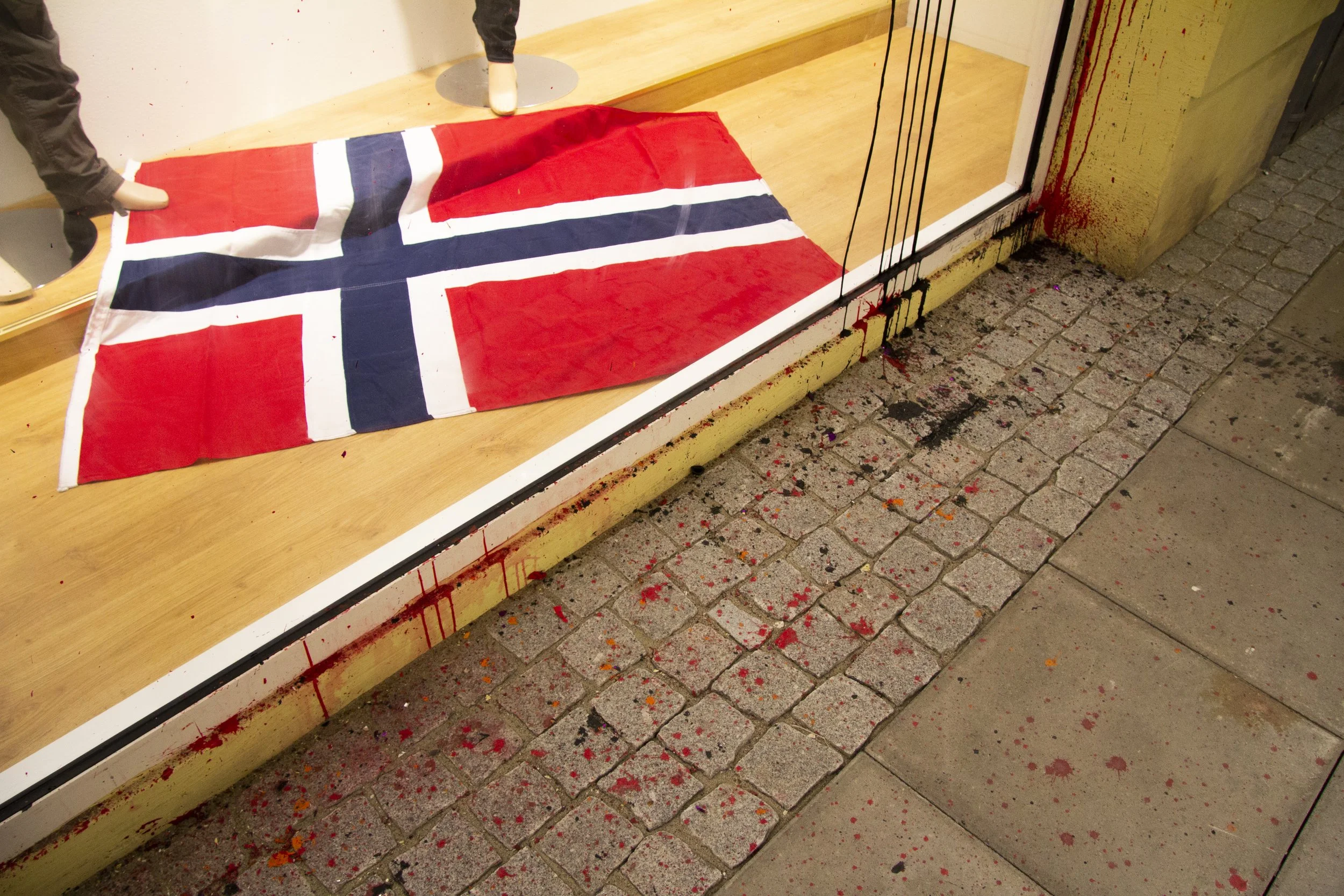
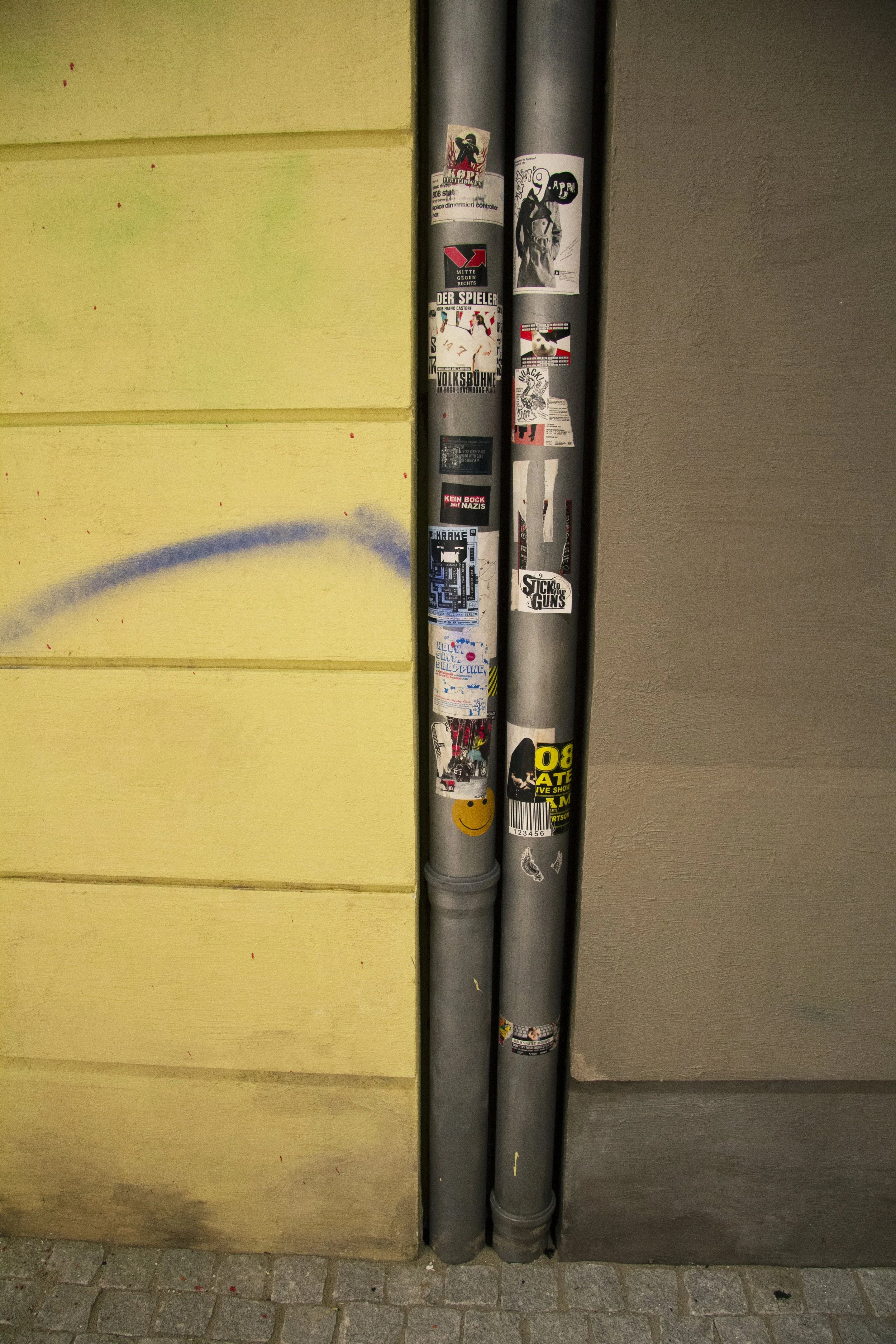
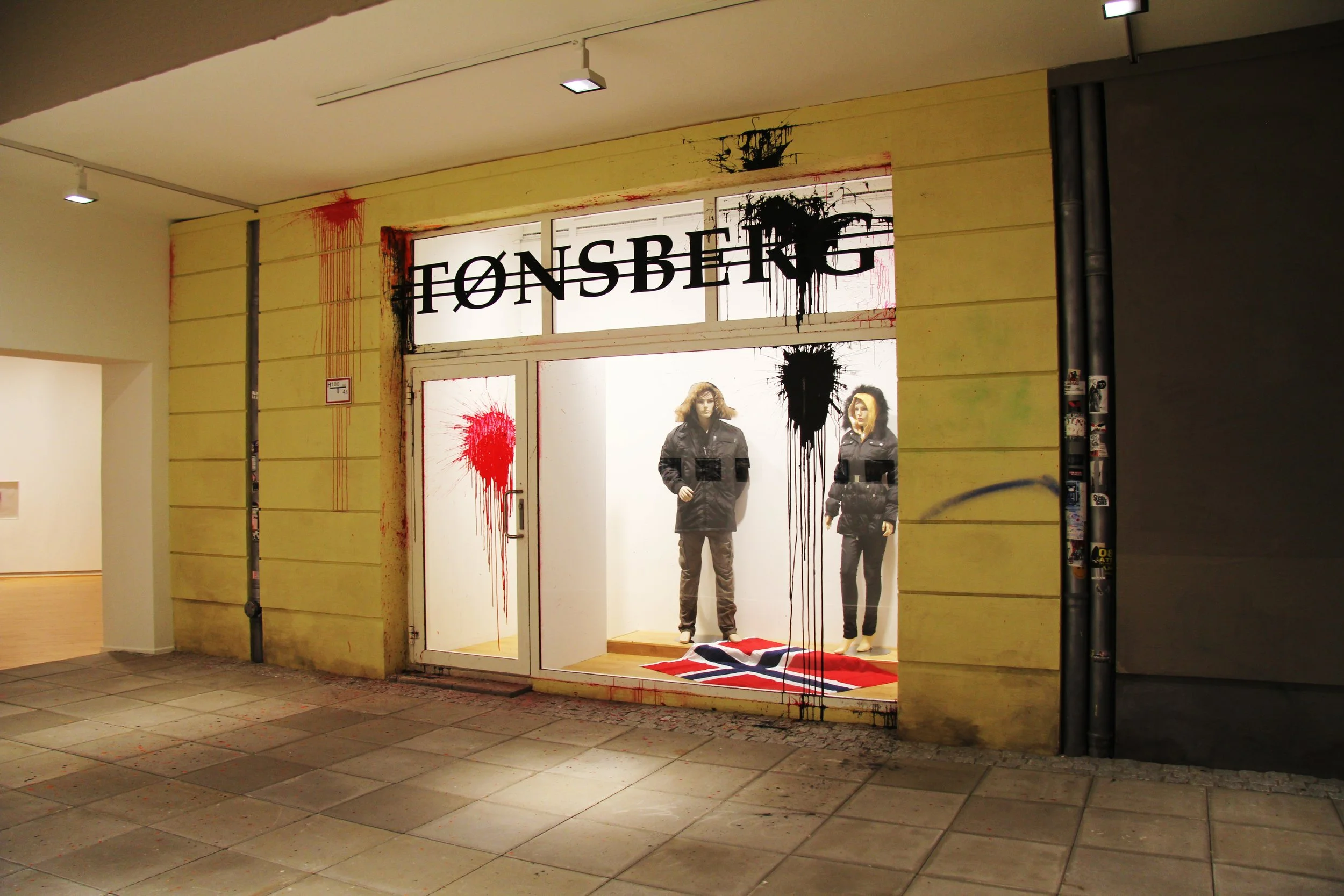
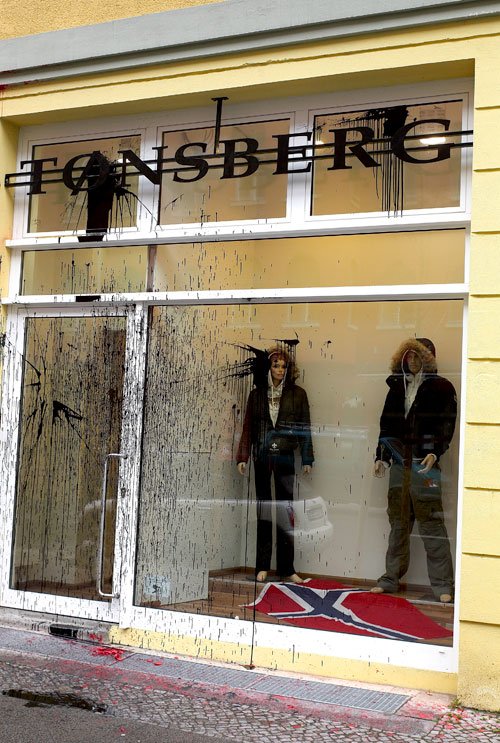
Ramberg’s installation meticulously recreates the shopfront inside the museum space, collapsing the boundary between street and institution. The floor is covered with paving stones, the façade bears traces of graffiti and stickers, and paint appears to run down the windows—referencing the weekly anti-fascist protests in which demonstrators throw paint bombs at the real stores. What is normally an act of resistance in public space is ritualized and absorbed into the work itself.
Behind the stained shop window, mannequins stand on a Norwegian flag arranged in the form of a swastika, dressed in jackets produced by Thor Steinar. The installation reveals how extremist ideology is disguised through a sporty, “clean” Scandinavian aesthetic—one that draws on romanticized notions of nature, masculinity, and Nordic identity while concealing its political content.
By relocating the storefront into the museum, TØNSBERG transforms a functioning propaganda site into an object of critical scrutiny. The work operates as what Ramberg describes as an architectonic, anti-fascist readymade: an existing ideological structure is neither abstracted nor aestheticized, but exposed through precise reconstruction and contextual displacement.
The project was first presented as part of the exhibition Viking Mythologies at Haugar Kunstmuseum curated by Tone Lyngstad Nyaas, which examined how Viking history and Norse symbolism circulate between ideology, nationalism, and popular culture. In 2021, the installation was recontextualized at Bomuldsfabrikken Kunsthall in Arendal within the exhibition FREIHEIT. Shown alongside Ramberg’s long-term investigation into language, power, and ideological control, TØNSBERG was framed within a broader reflection on freedom of expression, resistance, and the political use of symbols.
Across its different presentations, TØNSBERG has generated extensive public debate, involving politicians, schools, and cultural institutions. The work does not accuse history itself, but interrogates the mechanisms through which history is selectively romanticized, commercialized, and weaponized. It insists on responsibility: for how symbols travel, how identities are constructed, and how easily democratic values can be hollowed out beneath familiar cultural forms.
At its core, TØNSBERG confronts the fragile boundary between shared heritage and ideological abuse—and asks where vigilance must begin.