P L A T Z D E S Z W E I F E L S
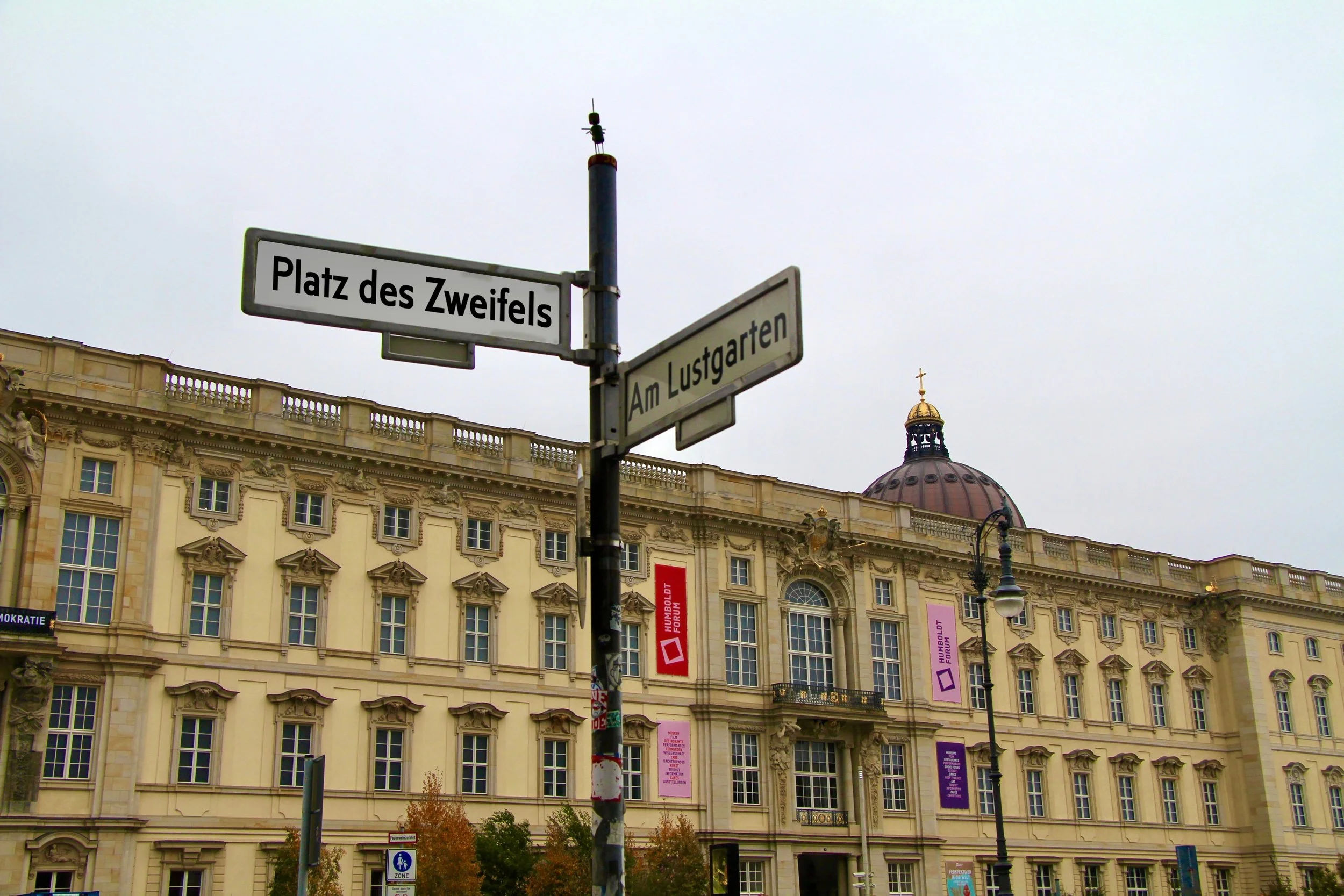
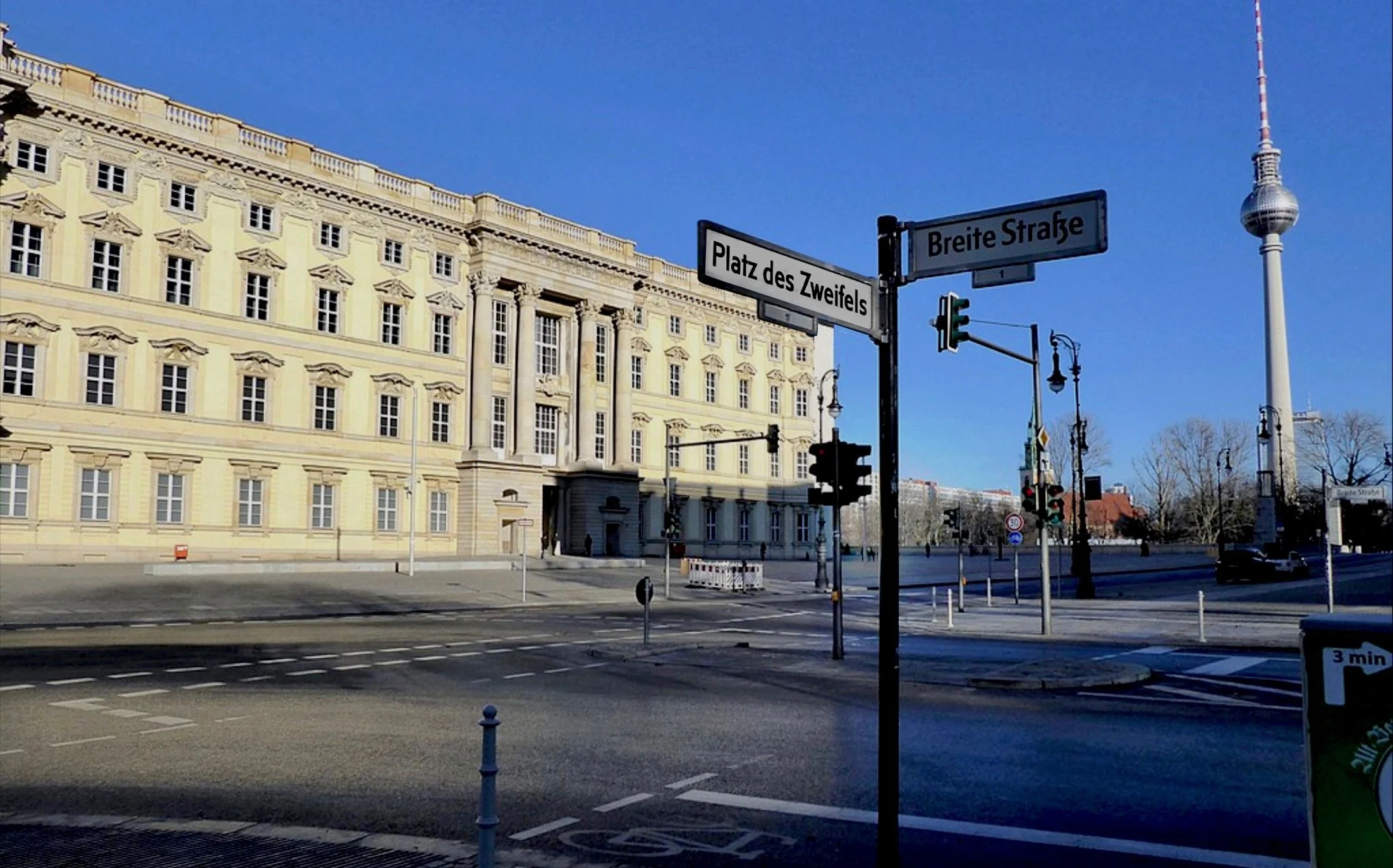
PLATZ DES ZWEIFELS is a conceptual extension of the seminal artwork PALAST DES ZWEIFELS (2005). While the original project transformed the former Palast der Republik into a monumental statement on collective uncertainty during a pivotal moment of German reunification, PLATZ DES ZWEIFELS shifts the focus from the building to the public space itself—from architecture to civic ground, from monument to discourse.
At the heart of the project lies the conviction that doubt is not a weakness but a democratic virtue. In contrast to ideological certainty, doubt enables reflection, plurality, and critical thought. Where monuments traditionally stabilize historical narratives, PLATZ DES ZWEIFELS insists on keeping history open—unfinished, debatable, alive.
The project proposes the symbolic and spatial redefinition of the Schlossplatz in Berlin as PLATZ DES ZWEIFELS. Located on the historically charged site where the Palast der Republik once stood and where the reconstructed Berlin Palace and Humboldt Forum now dominate the urban landscape, the square embodies Germany’s unresolved relationship with its past. The disappearance of the Palast and the reconstruction of the Palace have not resolved this history; they have displaced it. PLATZ DES ZWEIFELS brings this displacement back into public consciousness.
Central to the project is the reinstallation of the sculptural light work ZWEIFEL in direct dialogue with the Humboldt Forum. Detached from its former architectural host, the work becomes an autonomous presence in public space—no longer a label attached to a building, but a condition imposed upon a place. The square itself becomes the artwork: a space that asks questions rather than providing answers.
PLATZ DES ZWEIFELS does not seek reconciliation through closure, nor consensus through symbolism. Instead, it offers doubt as a productive state—one that resists simplification and ideological comfort. The project positions the Schlossplatz as a permanent site of reflection, where conflicting histories, narratives, and identities are not resolved but consciously held in tension.
In an era marked by increasing polarization, historical revisionism, and the desire for clear positions, PLATZ DES ZWEIFELS insists on complexity. It transforms one of Berlin’s most symbolically overdetermined locations into a living forum for critical thinking—an invitation to remain vigilant, self-reflective, and open.
Doubt, here, is not an interruption of democracy.
It is its foundation.