U N E I N I G K E I T
Ostsee Biennale, Rostock (2023)
UNEINIGKEIT is a precise and charged intervention into the symbolic language of German national mythology. The work takes as its point of departure the official triad “Einigkeit, Recht und Freiheit” (“Unity, Justice and Freedom”)—the only surviving verse of the German national anthem still sung today—and transforms it through a single, potent gesture: Einigkeit (unity) becomes Uneinigkeit (disunity). This minimal semantic shift ruptures the illusion of national coherence and opens a conceptual space for democratic pluralism. Ramberg poses a foundational question: Is disunity not the very condition of democracy? While Einigkeit—as both rhetorical device and ideological construct—conjures homogeneity and consensus, Uneinigkeit signals friction, contradiction, and the need for negotiation. It is not a threat to the democratic process, but its very engine. The phrase “Einigkeit, Recht und Freiheit,” embossed on German euro coins, is more than a slogan—it is an economic and ideological substrate. Yet the seeming permanence of this formula invites challenge. What if a democracy worthy of its name began instead with Uneinigkeit?
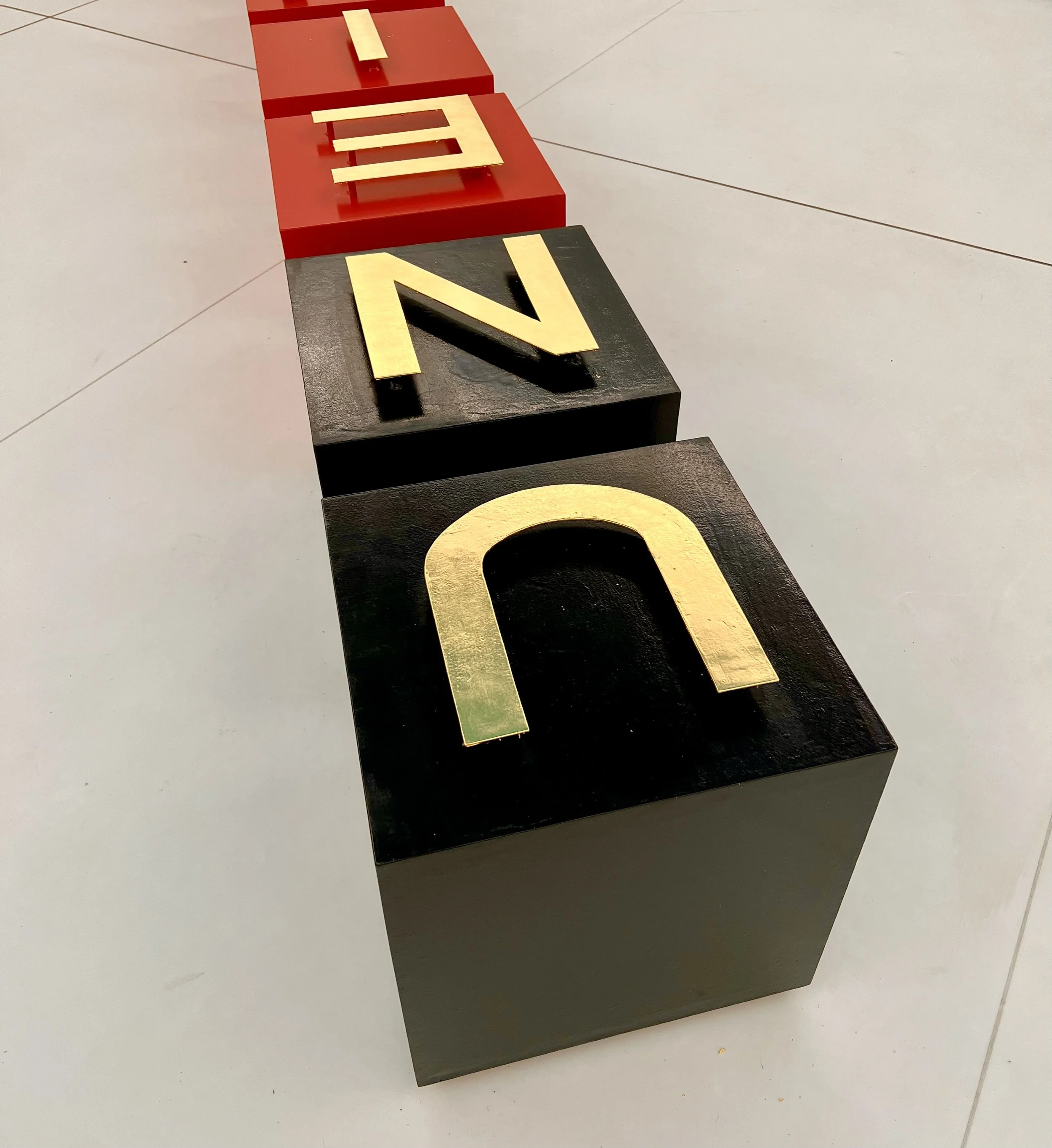
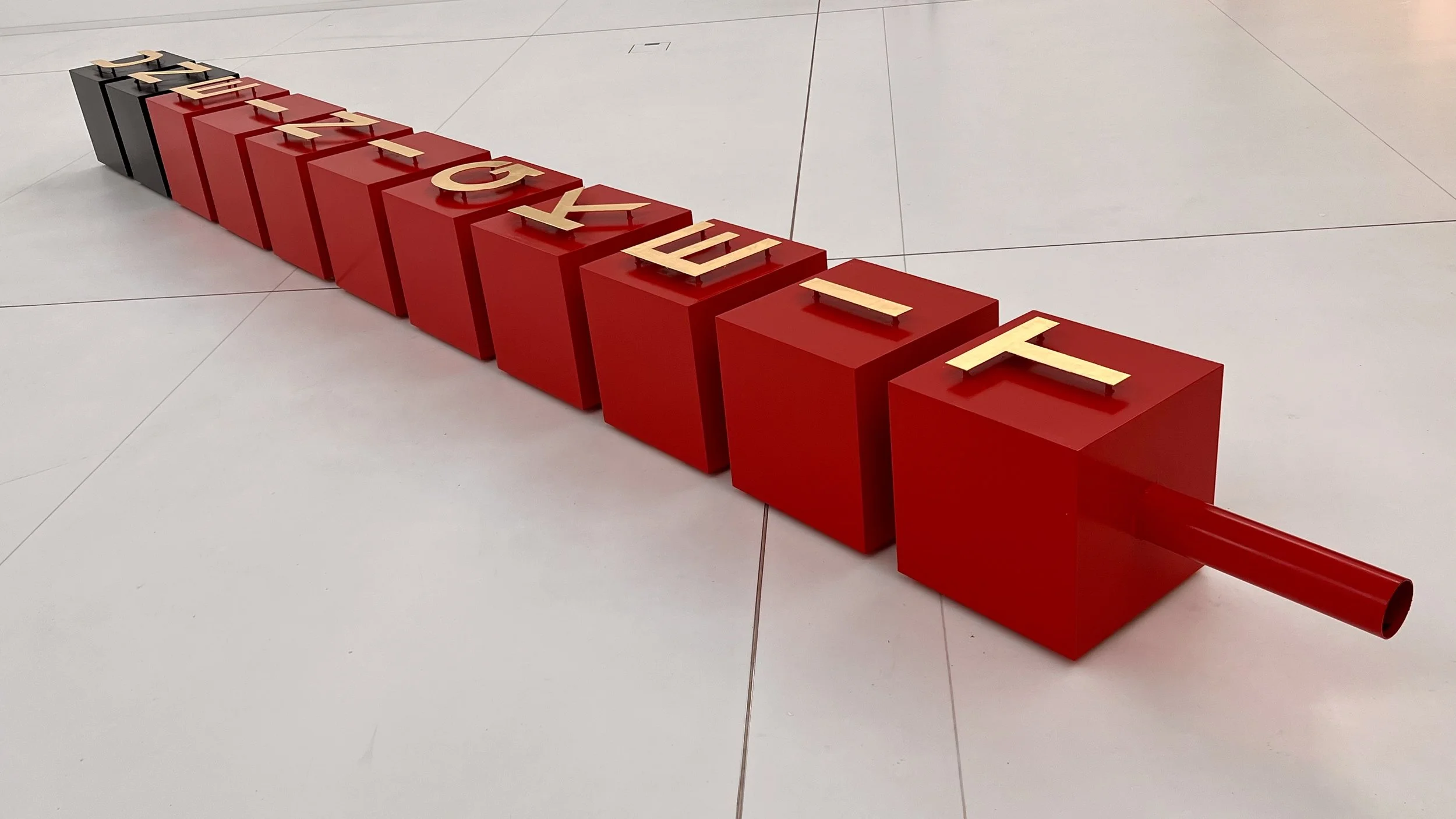
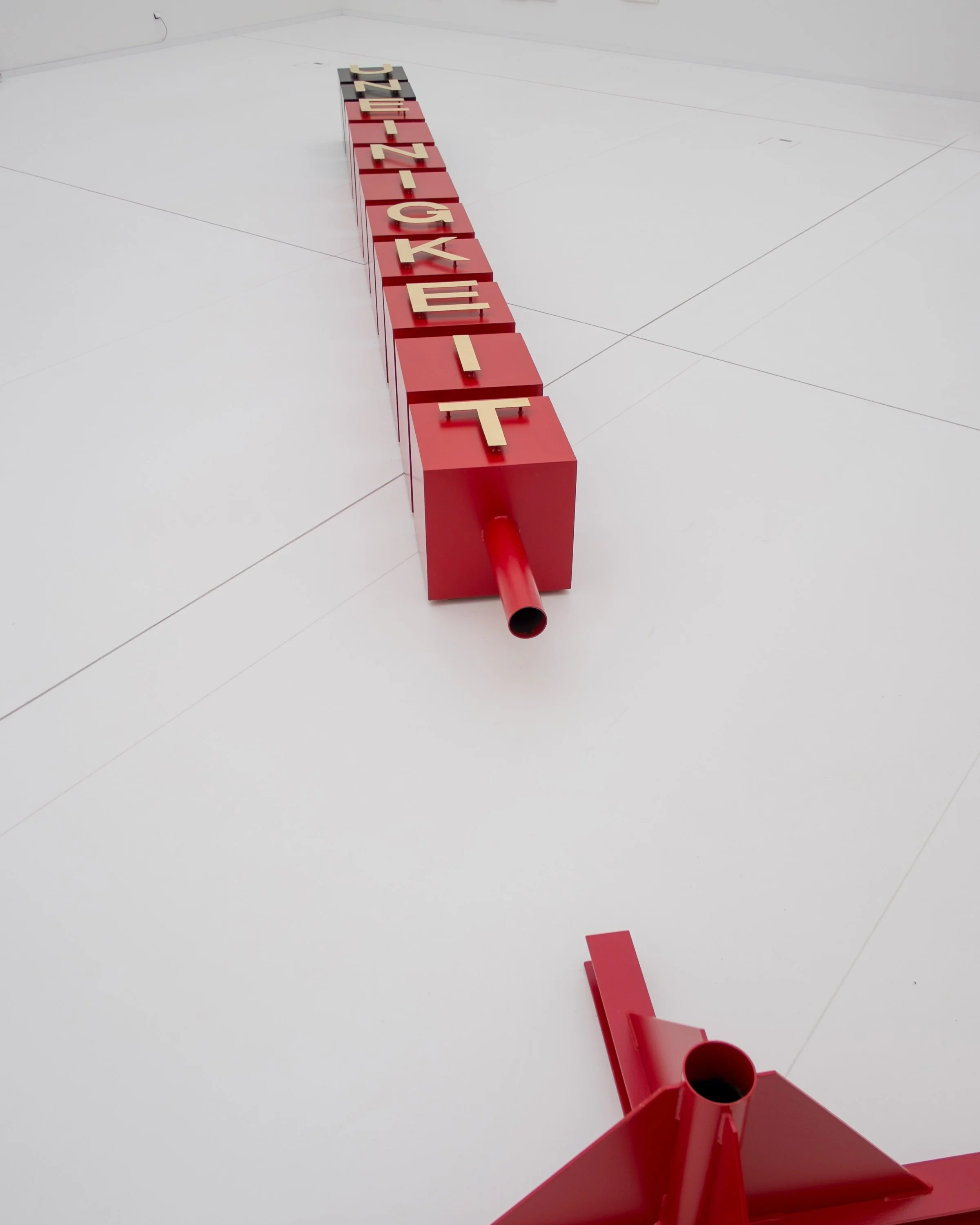
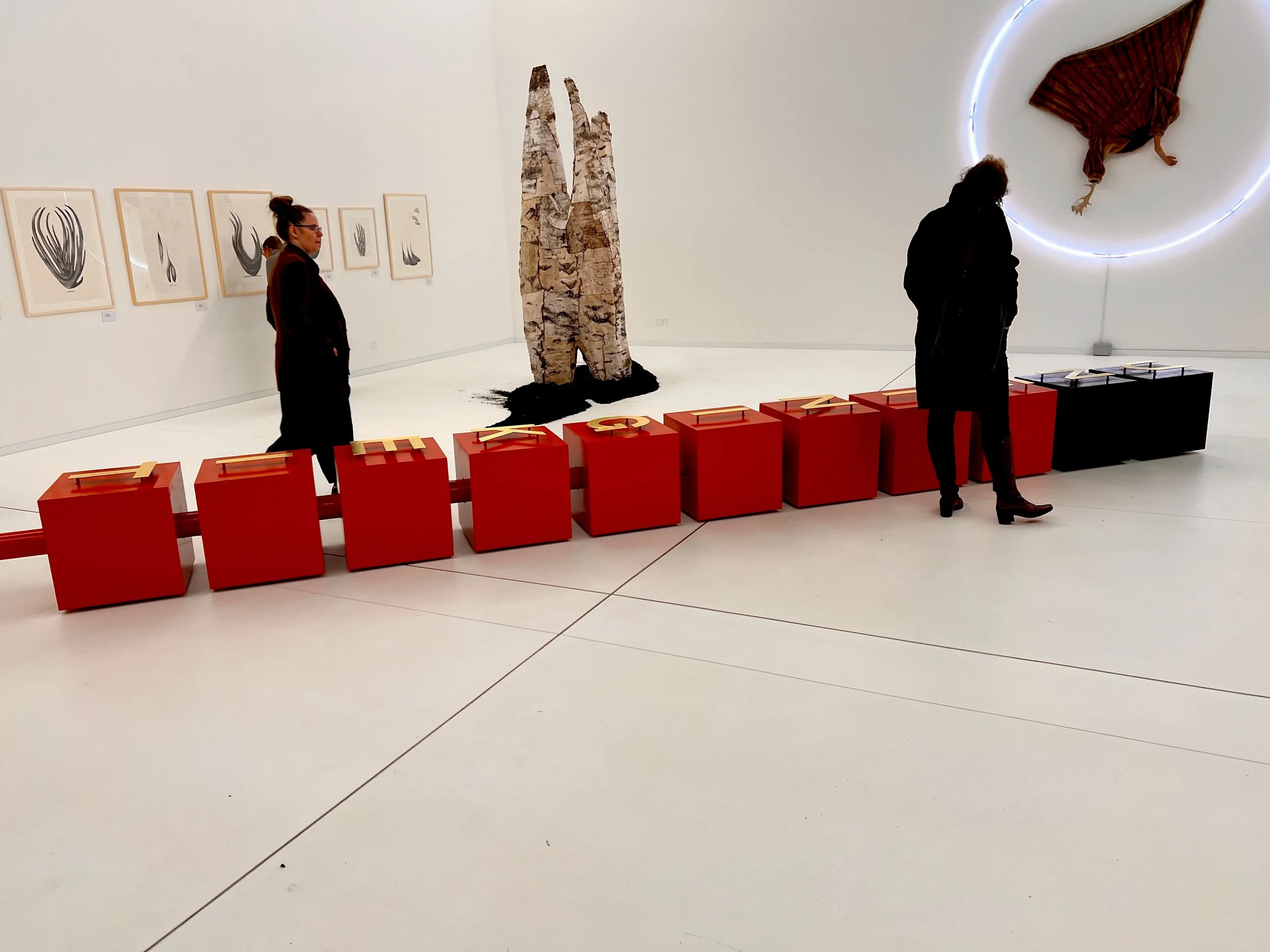
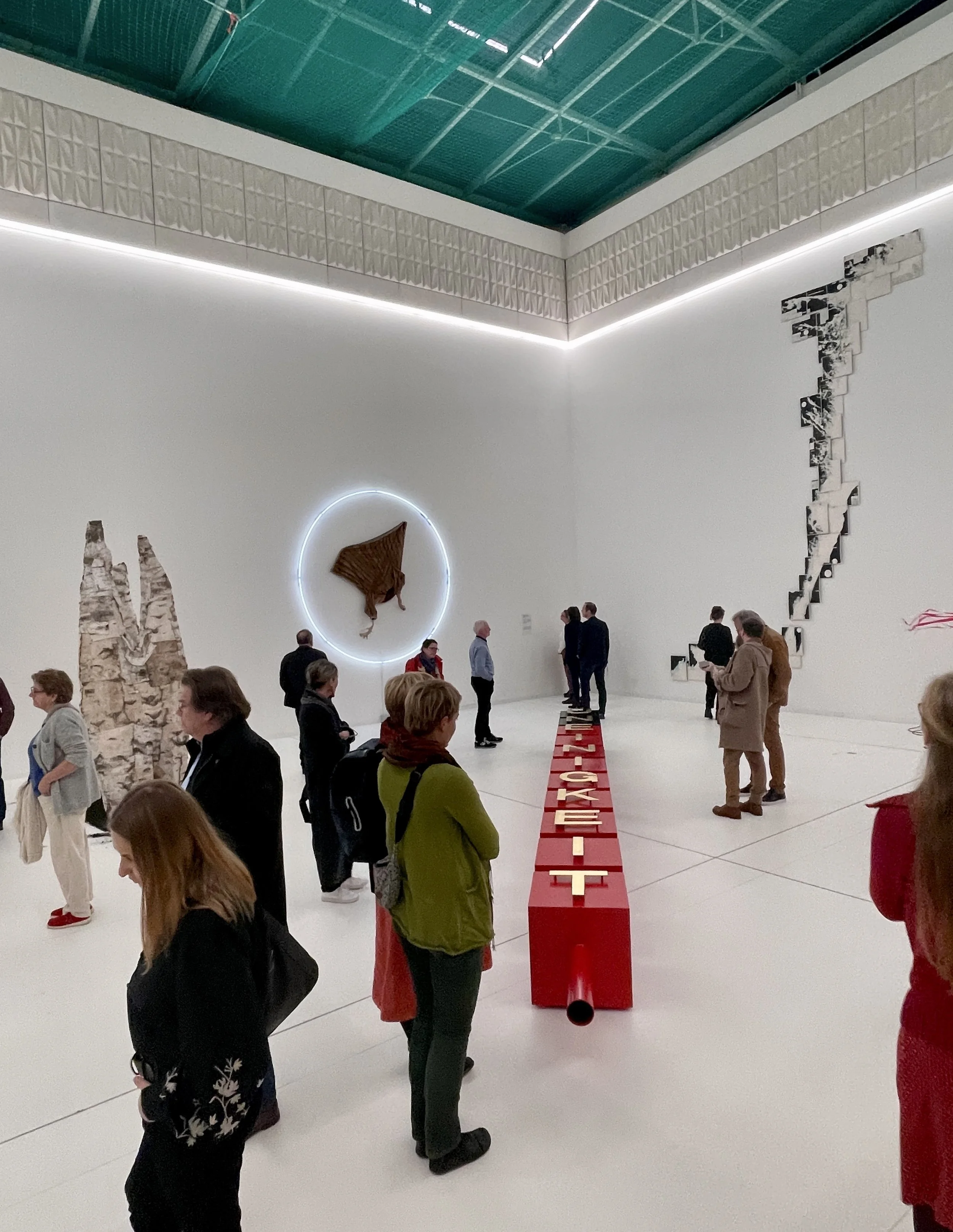
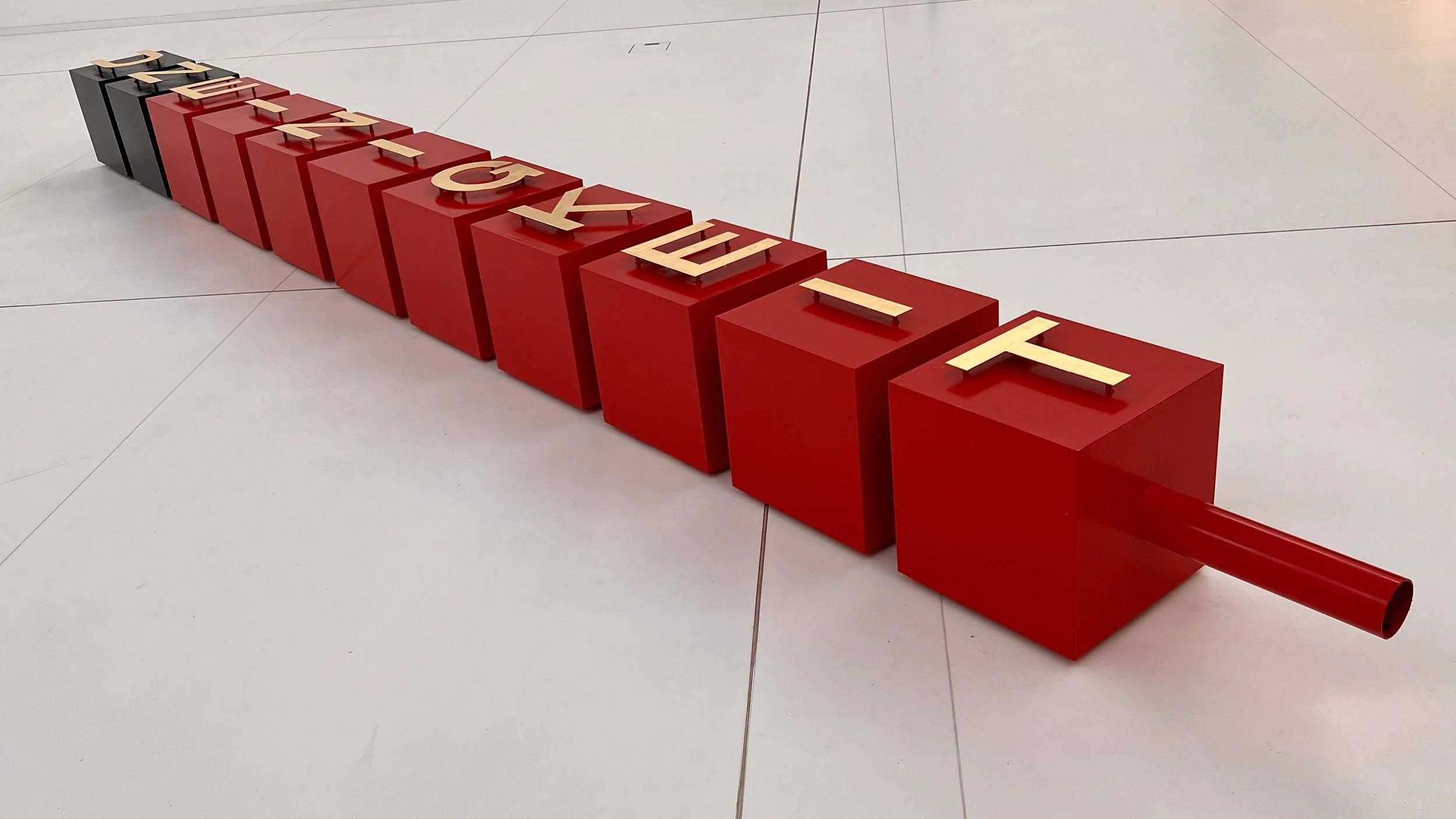
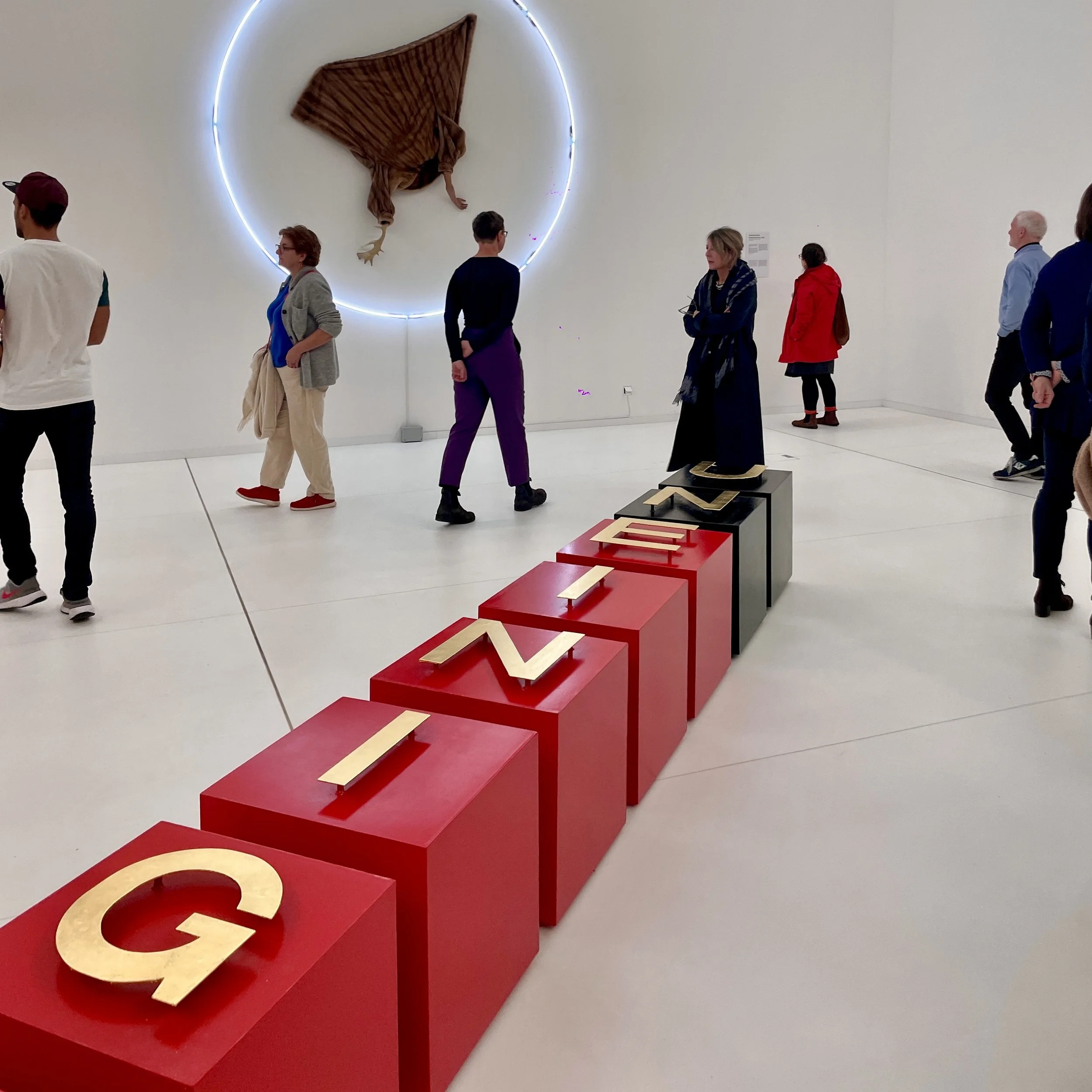
The national anthem itself is a site of historical fracture: the first verse, “Deutschland, Deutschland über alles,” was repurposed by the Nazis and is now banned; the second, entangled in outdated conservative values, was quietly omitted. Only the third verse remains—cleansed of its past, but never truly interrogated. UNEINIGKEIT confronts this sanitized residue with conceptual precision, suggesting that even this last verse might require rewriting—Uneinigkeit, Recht und Freiheit—as a more truthful expression of a nation founded not on unity, but on disagreement. The physical object manifests this proposition in sculptural form: a monumental text-based structure constructed from welded steel cubes in a severe, systematized typographic geometry that evokes East German state aesthetics. The nine red cubes spell the word UNEINIGKEIT, each letter executed in 24-karat gold leaf—gleaming, official, sovereign. The two additional cubes supporting the prefixed letters U and N are painted black, visually set apart from the main body. They function both structurally and semantically as disruption, as negation made visible. The chromatic composition—red, black, and gold—echoes the German flag, but the color logic is deliberately fractured. The result is a visual syntax of ideological tension: between monumentality and fragility, assertion and dissonance.
UNEINIGKEIT continues Ramberg’s earlier work EINIGKEIT (1999), in which a rusted garden column found in Griebenow was recontextualized as a poetic ruin—a melancholic relic of postwar utopia. While EINIGKEIT invited silent reflection, UNEINIGKEIT is confrontational. It intervenes in language, space, and national symbolism. The added prefix “UN-” acts not only as a semantic reversal but as a sculptural breach—pressing into the illusion of historical consensus.
Simultaneously, the English reading of “UN” invokes the United Nations. This bilingual ambiguity creates a semantic double exposure: in German, Un- marks negation; in English, “UN” signals global alliance. Between fragmentation and federation, the work stages a tension between geopolitical grammars. It reminds us that unity itself is not neutral—it is constructed, enforced, and always contested. By affirming disunity as a democratic force—not a flaw—UNEINIGKEIT positions dissent as an essential political value. In an age when consensus is mistaken for peace, and conformity for solidarity, the work advances an ethics of difference. It is a critique of silent agreement and a call to preserve spaces of disagreement—not in spite of democracy, but for its survival. Through the insertion of a single prefix, the work performs a quiet yet radical act. UNEINIGKEIT is not merely a linguistic provocation. It is a conceptual reconfiguration of the political field—welded into matter, gilded into memory, and planted like a question into the foundations of national identity.