
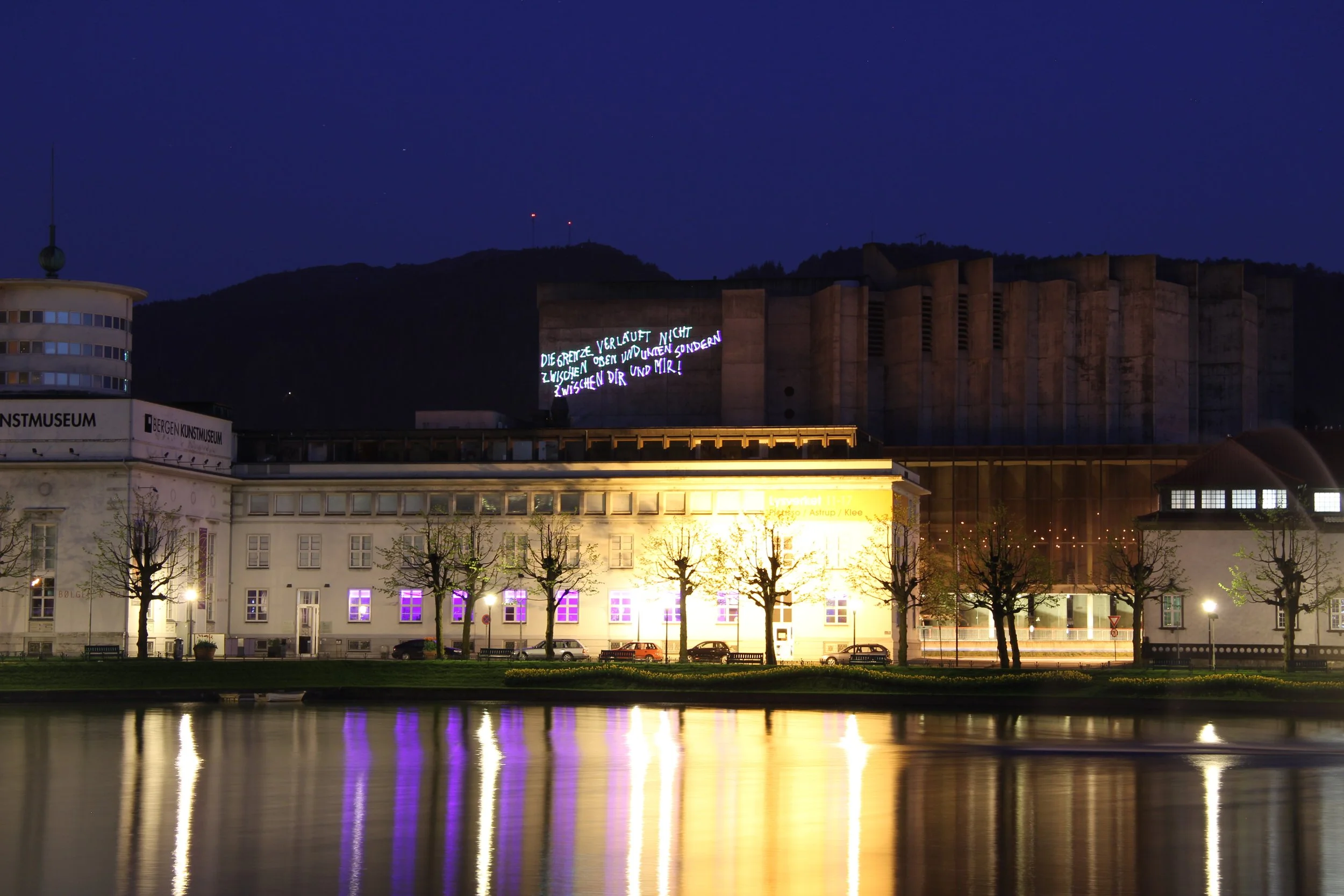
D I E G R E N Z E
Public art project, Bergen, 2012
Die Grenze is a site-specific public art project developed for Festspillene i Bergen (Bergen International Festival) in 2012. The work examines social, political, and cultural boundaries by translating historical graffiti texts from Berlin into a new urban and institutional context in Bergen.
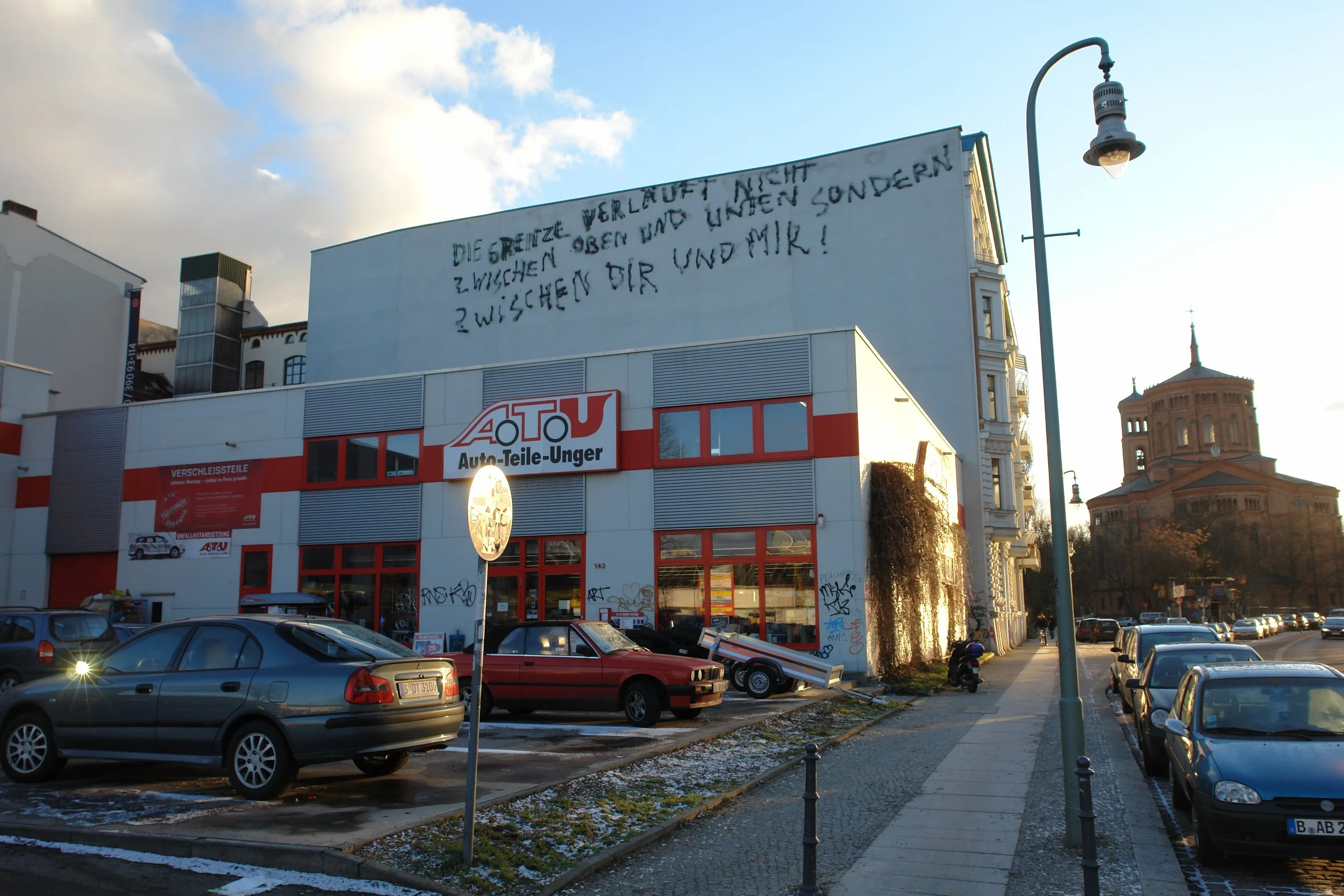
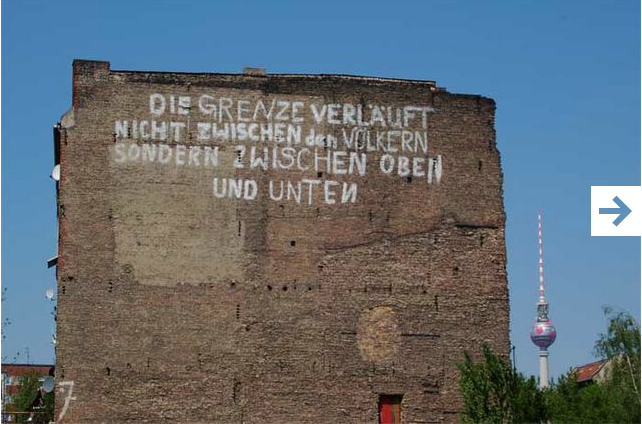
The project is based on two graffiti statements that appeared in Berlin on opposite sides of the former Berlin Wall, painted roughly a decade apart:
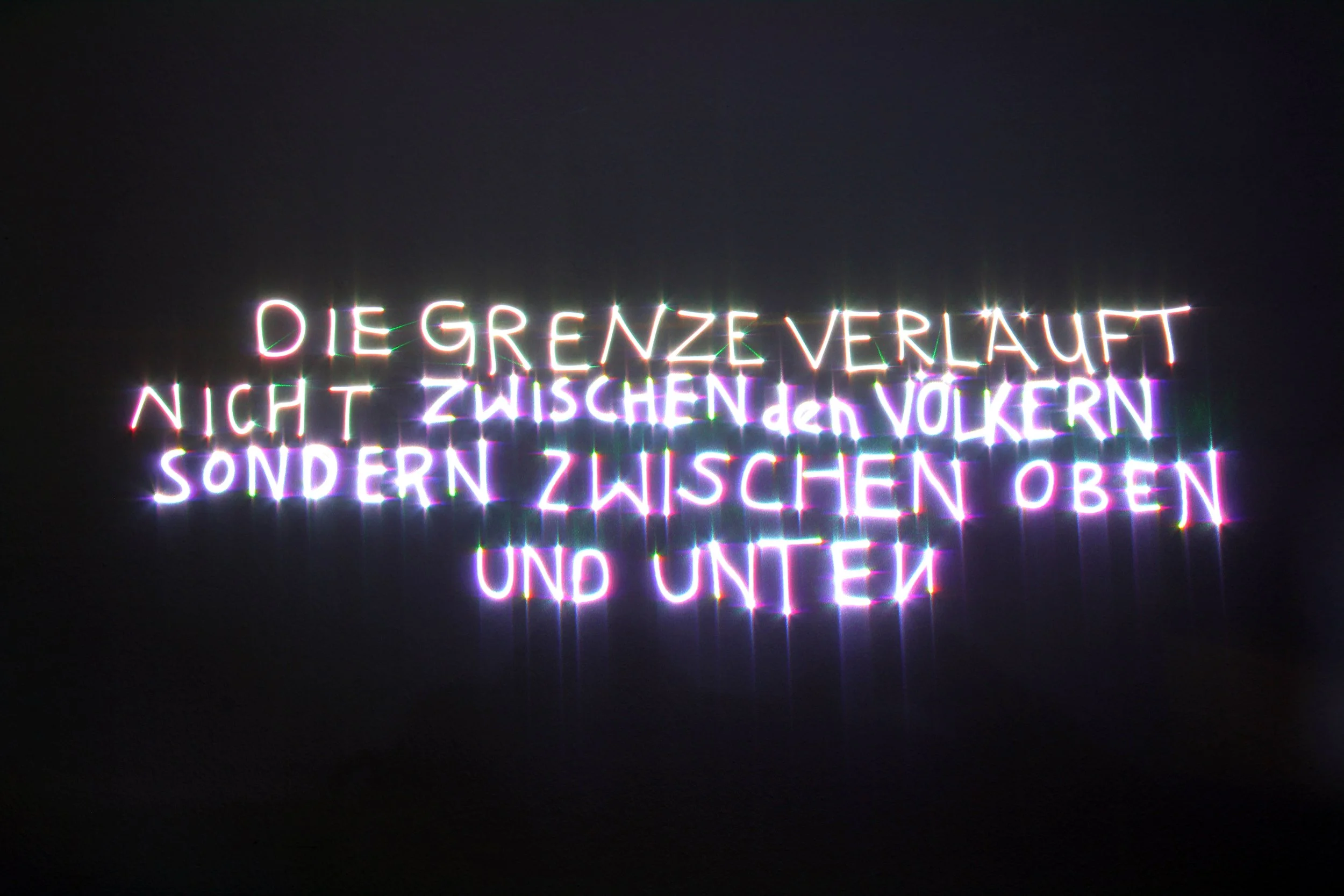
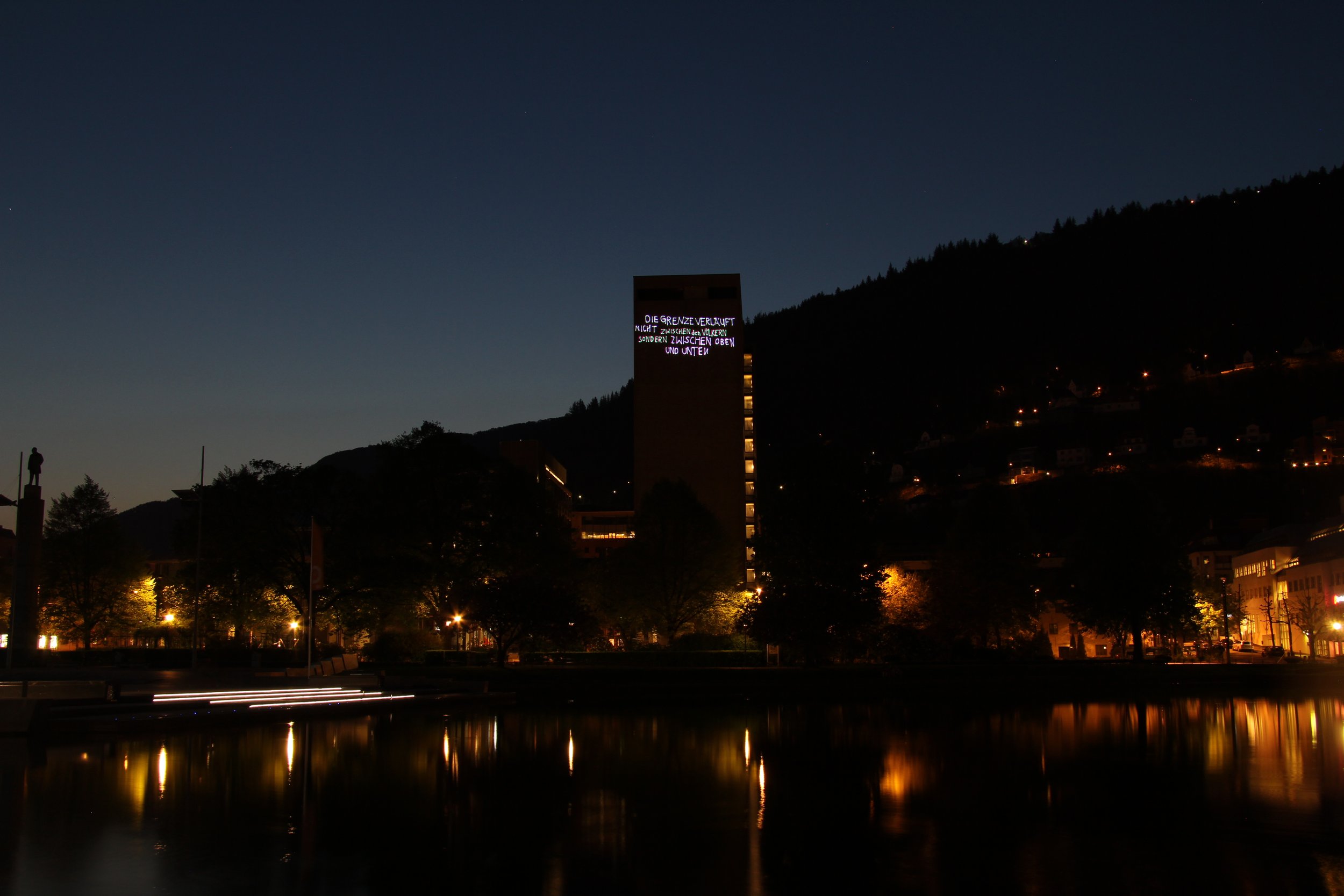
“Die Grenze verläuft nicht zwischen den Völkern, sondern zwischen oben und unten.”
(The border does not run between peoples, but between those above and those below.)
and later:
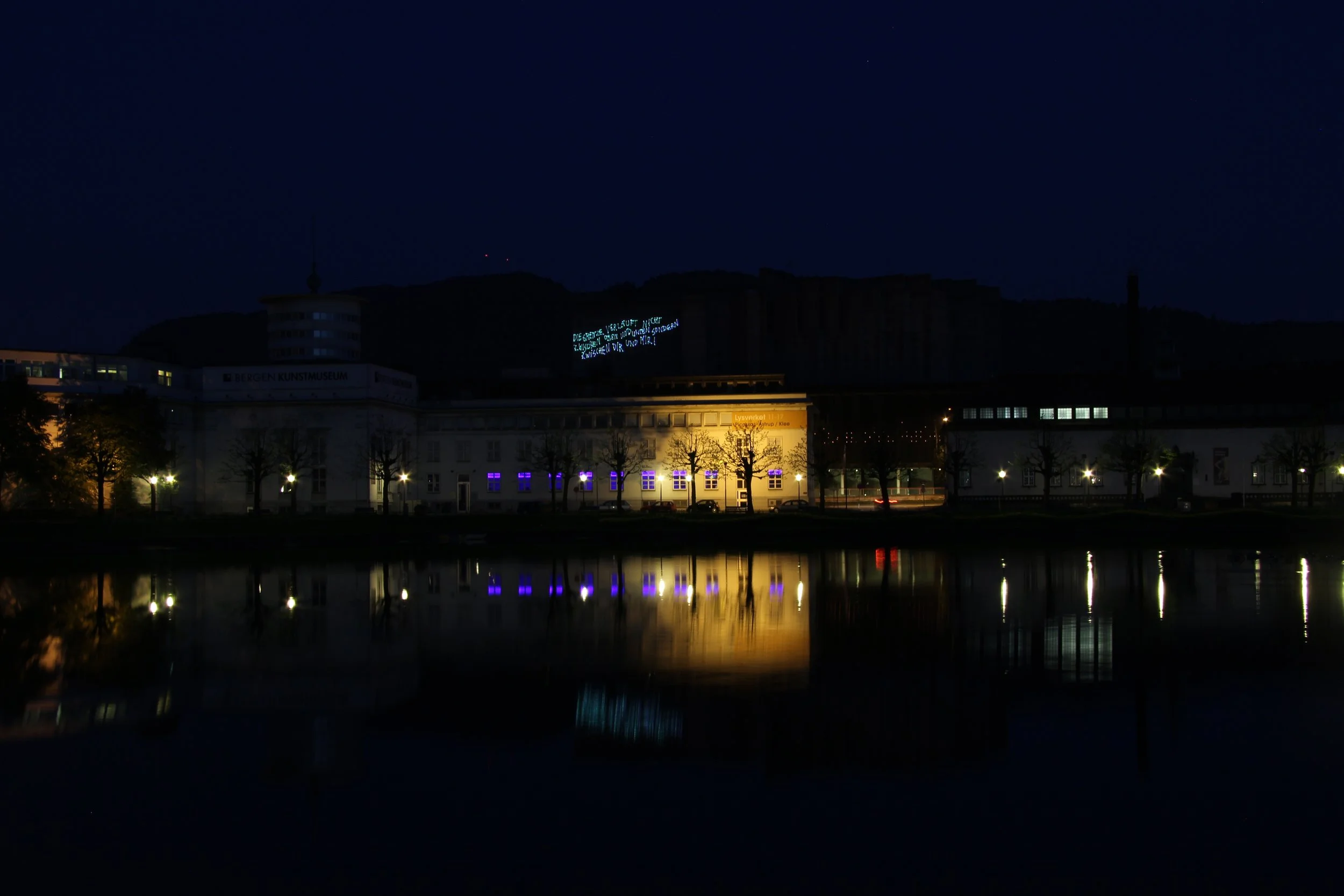
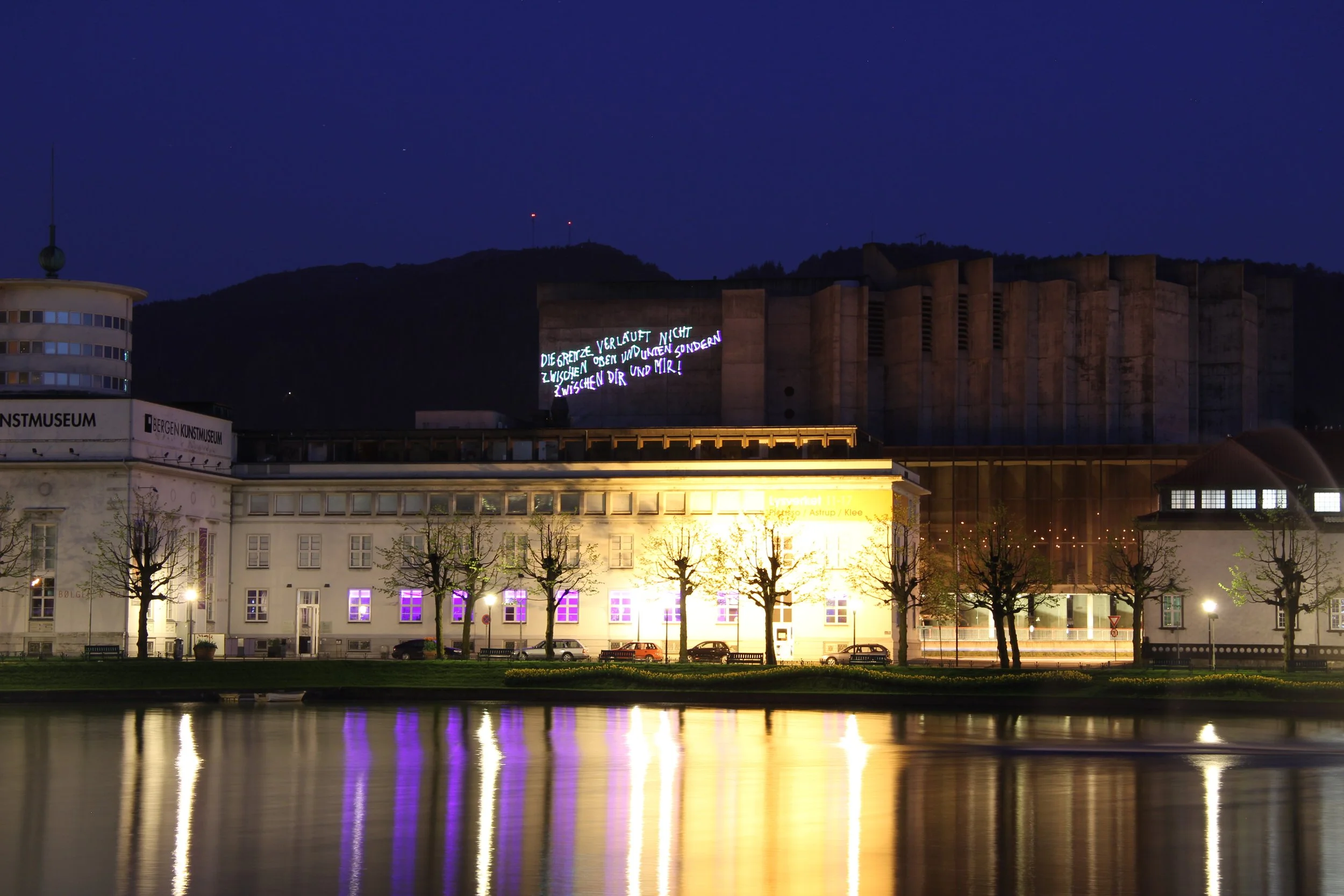
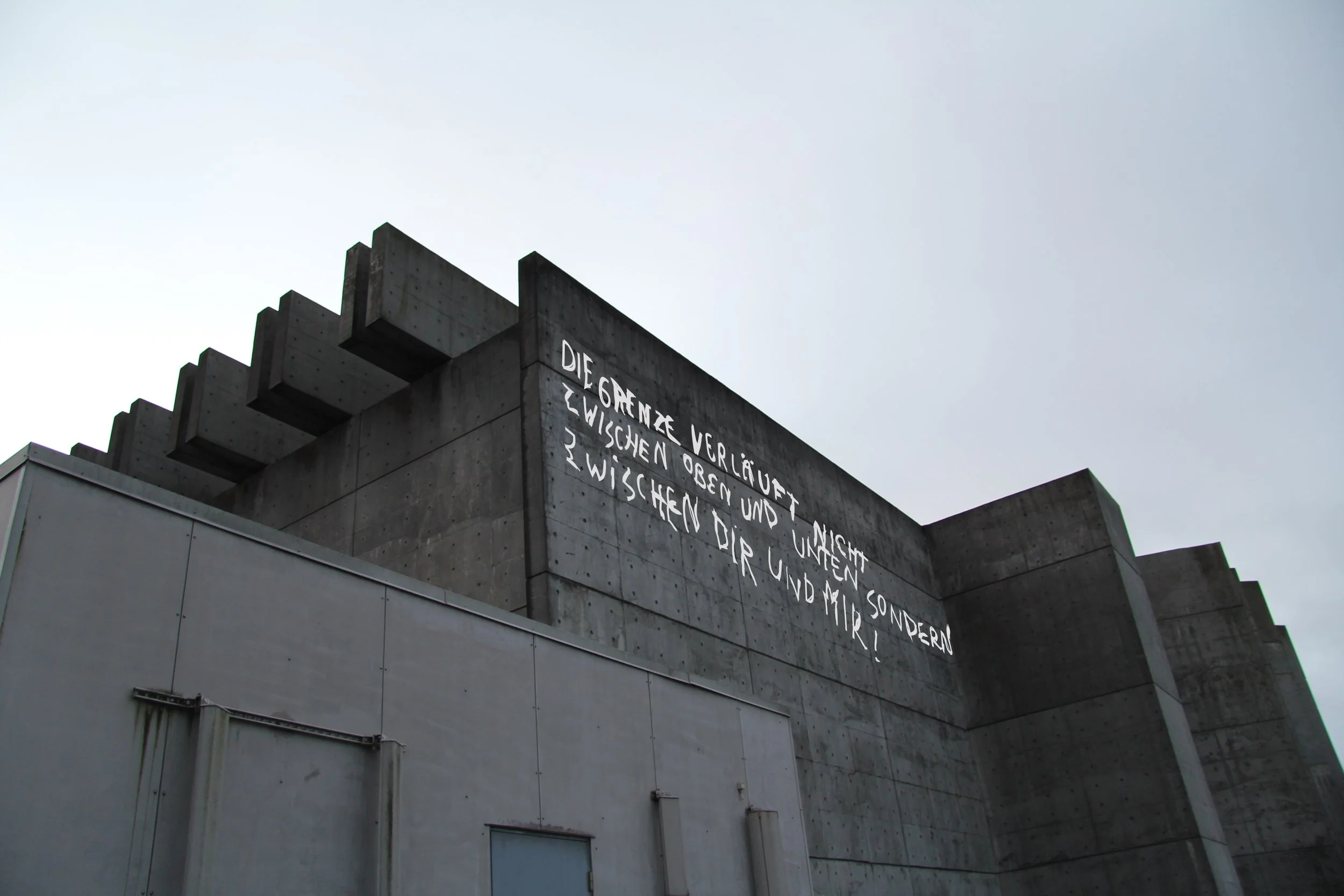
“Die Grenze verläuft nicht zwischen oben und unten, sondern zwischen dir und mir.”
(The border does not run between above and below, but between you and me.)
Originally emerging from the political and social tensions following the fall of the Berlin Wall, the texts reflect a shift from collective, ideological conflict toward more individual and relational forms of division.
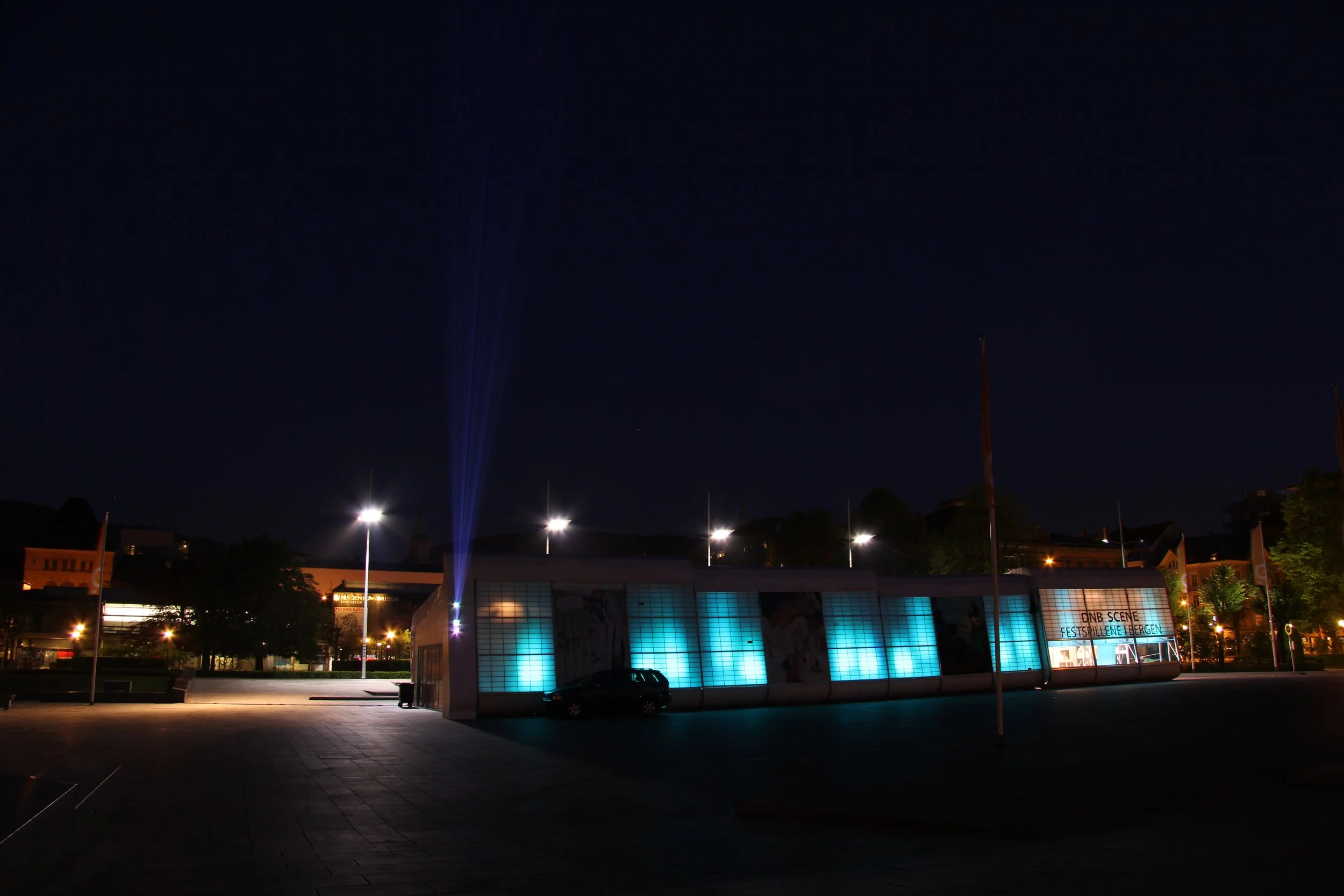
In Die Grenze, these statements were recontextualized and projected as large-scale laser texts onto two emblematic buildings in Bergen: the City Hall (Rådhuset) and the Grieghallen. The buildings were chosen for their contrasting architectural forms and symbolic roles—political power versus cultural representation, vertical authority versus horizontal openness.
By using laser light instead of permanent paint, the work occupied the visual language of graffiti while remaining temporary and reversible. This strategy emphasized the immaterial nature of borders, while also engaging directly with local debates on graffiti, public space, cultural elitism, and institutional power in Bergen at the time.
Spanning across the city rather than existing as a single object, Die Grenze functioned as a relational and discursive artwork—an urban “overlay” that connected architecture, history, and public debate. The project marked Festspillene i Bergen’s 60th anniversary by framing the jubilee itself as a boundary: between past and future, inclusion and exclusion, institution and public.
Die Grenze highlights how borders are not fixed lines, but shifting constructions—produced socially, politically, and personally—and invites viewers to reconsider where such boundaries are drawn, and by whom.
https://www.fib.no/festival/2020-og-tidligere/artikler/festspillene-viser-lasergrafitti-om-grenser