
N O C H M A L
For decades, every year on May 1, International Workers’ Day, large official parades took place on Karl-Marx-Allee in East Berlin.
The monumental socialist boulevard was built between 1949 and 1960 as a flagship building project of East Germany’s reconstruction program after World War II.
The avenue was lined with monumental eight-story buildings designed in the so-called wedding-cake style—the socialist classicism of the Soviet Union—offering spacious, luxurious apartments for workers, as well as shops, restaurants, and cafés. But the avenue was mainly designed to function as a parade street for the annual May Day parades. The street was initially called Stalin-Allee, but after the Berlin Wall went up in 1961, the boulevard was officially renamed after Karl Marx. Initially, the annual May Day parades, which ran between 1960 and 1989, featured thousands of goose-stepping soldiers along with tanks and other military vehicles to showcase the power and glory of the communist government. But toward the 1970s and ’80s, the military parades were transformed into folkloric demonstrations with banners and flowers. Hundreds of thousands of workers, soldiers, students, families, and famous athletes walked for hours, demonstrating their loyalty to the party and to international socialism.
Close to Alexanderplatz, on the sunny side of Karl-Marx-Allee, President Erich Honecker appeared as an icon on a red stage, and was always happily receiving tributes from the preprogrammed masses passing by.
Nineteen years after the fall of the wall, there are no longer May Day parades on Karl-Marx-Allee.
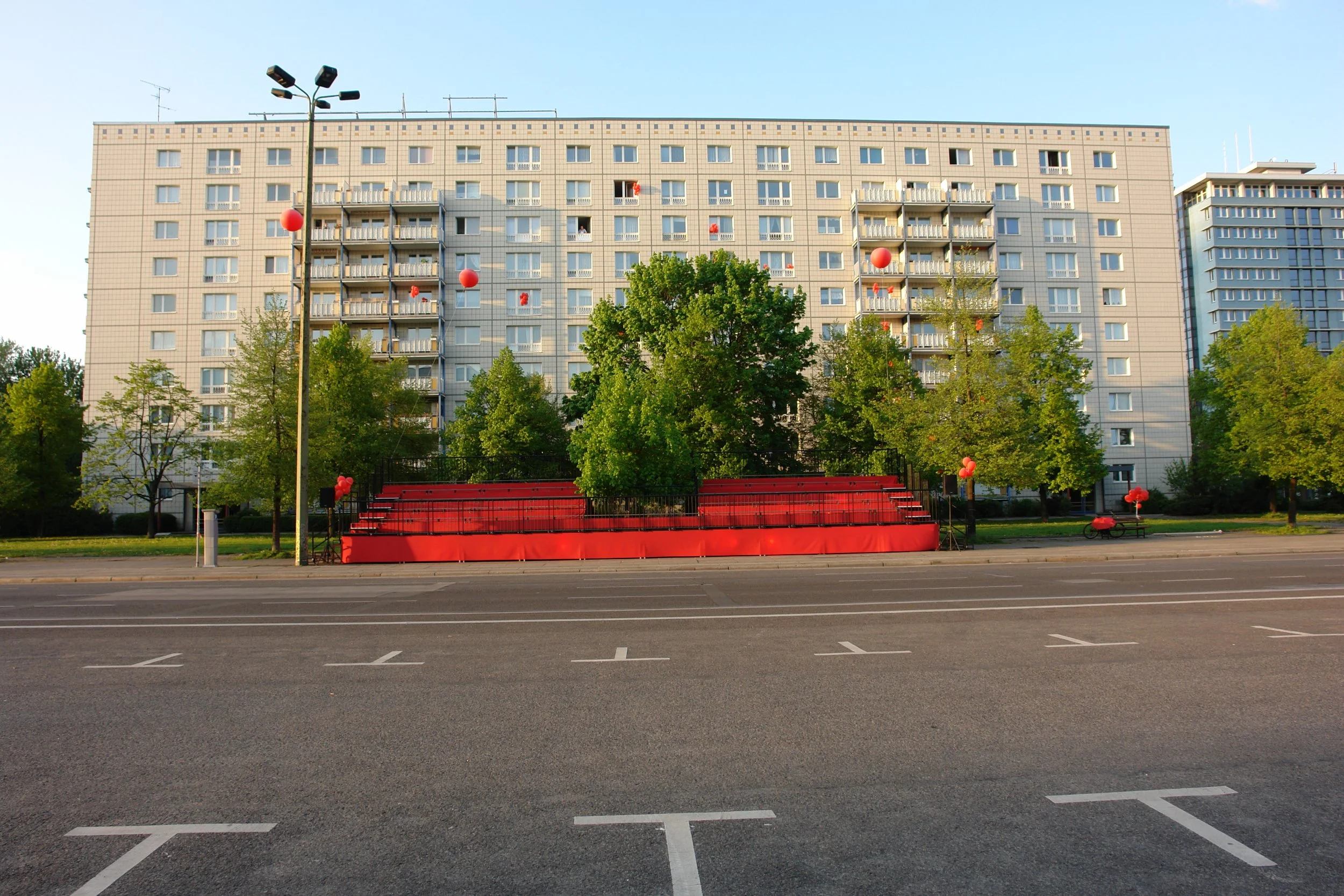
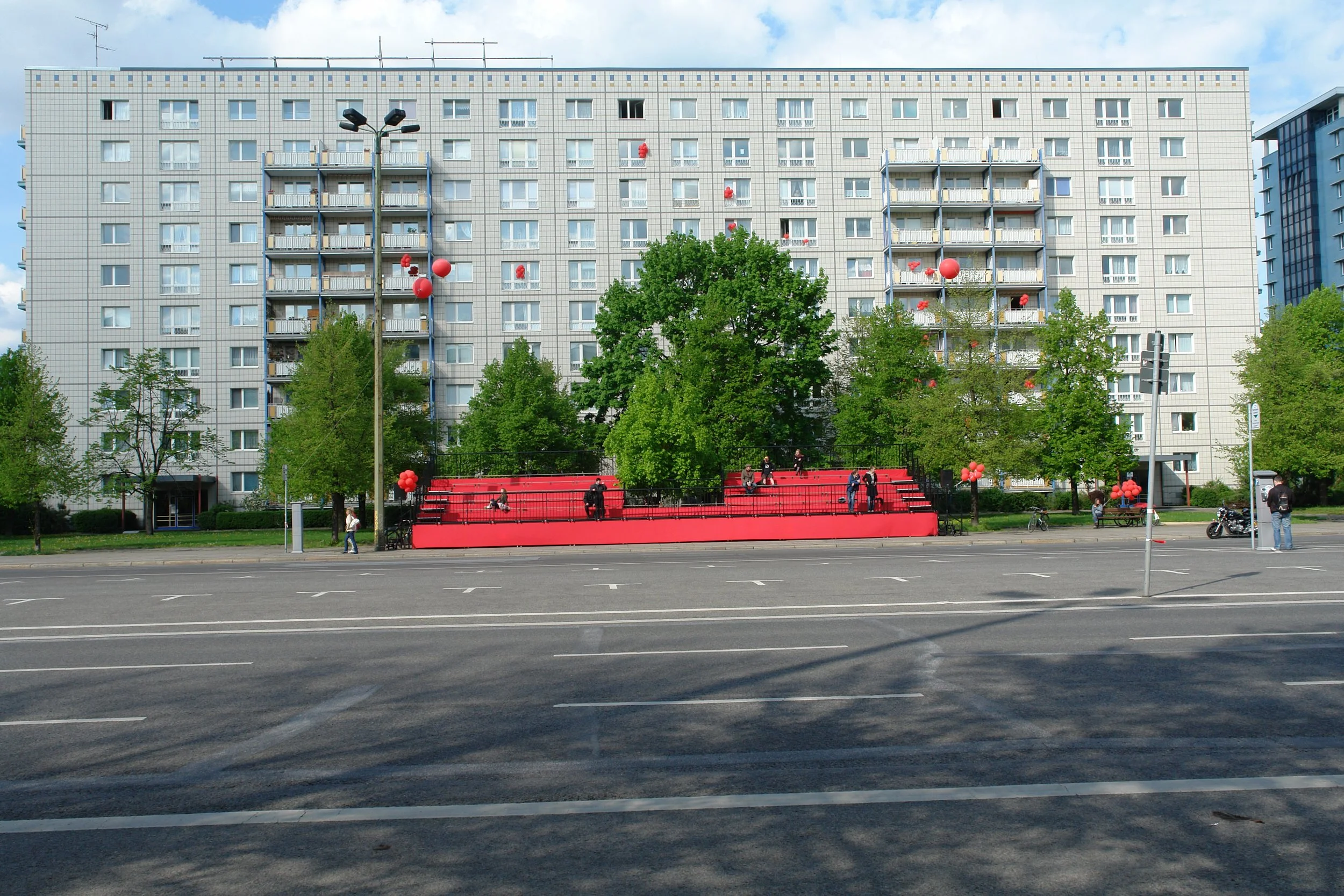
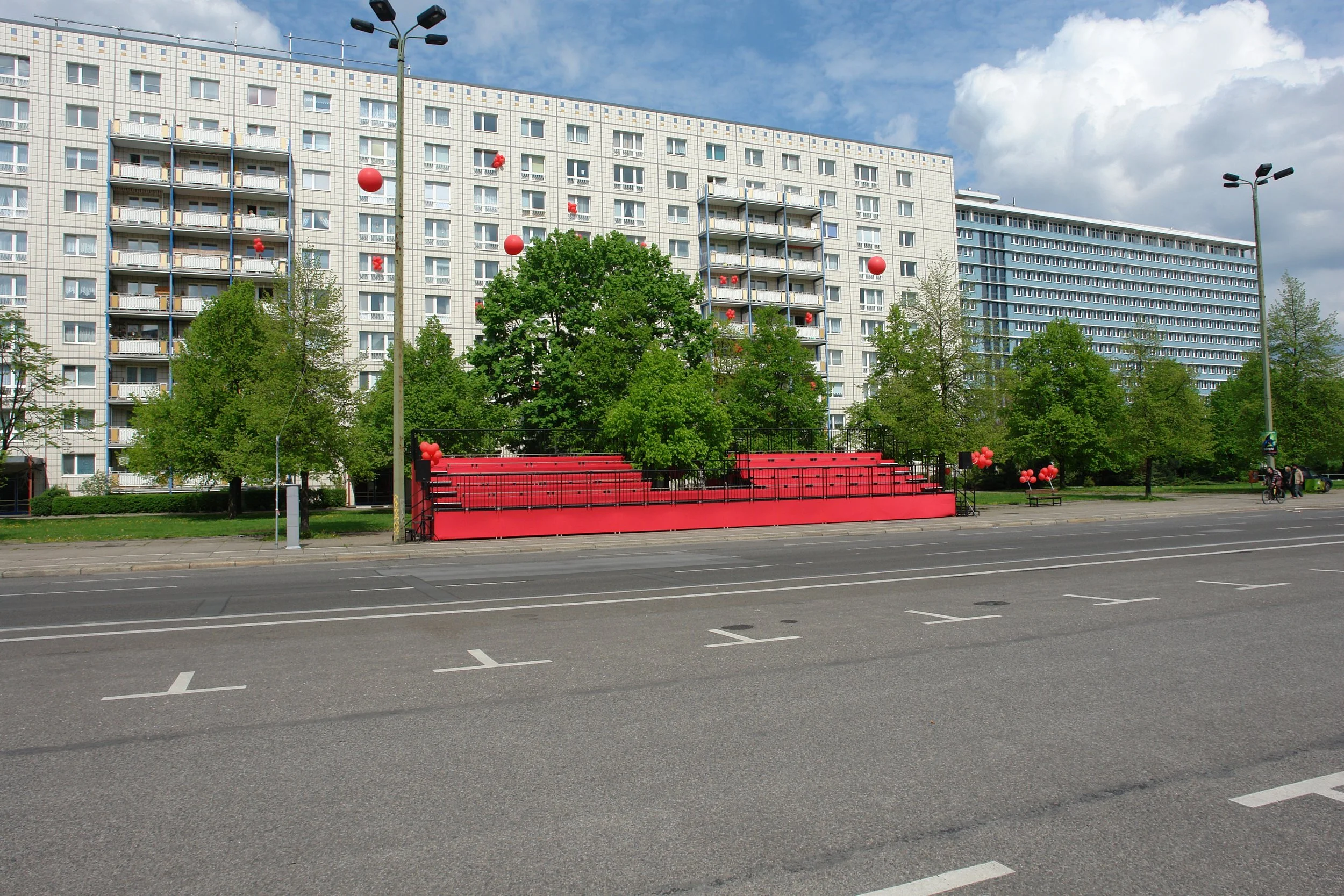
However, the Stalinist architecture is still there, and the same people are still resident in the buildings. As an echo from May Day celebrations on Karl-Marx-Allee, Ramberg, working with the German choreographer Christina Ciupke, developed the project NOCHMAL (once again). They conceived a site-specific, performative reconstruction of the authentic red stage from the past: the missing link.
The installation lasted only a day, but it triggered emotional responses from the local people—citizens passing by, as well as the special police force preparing for annual violence in a neighboring district.
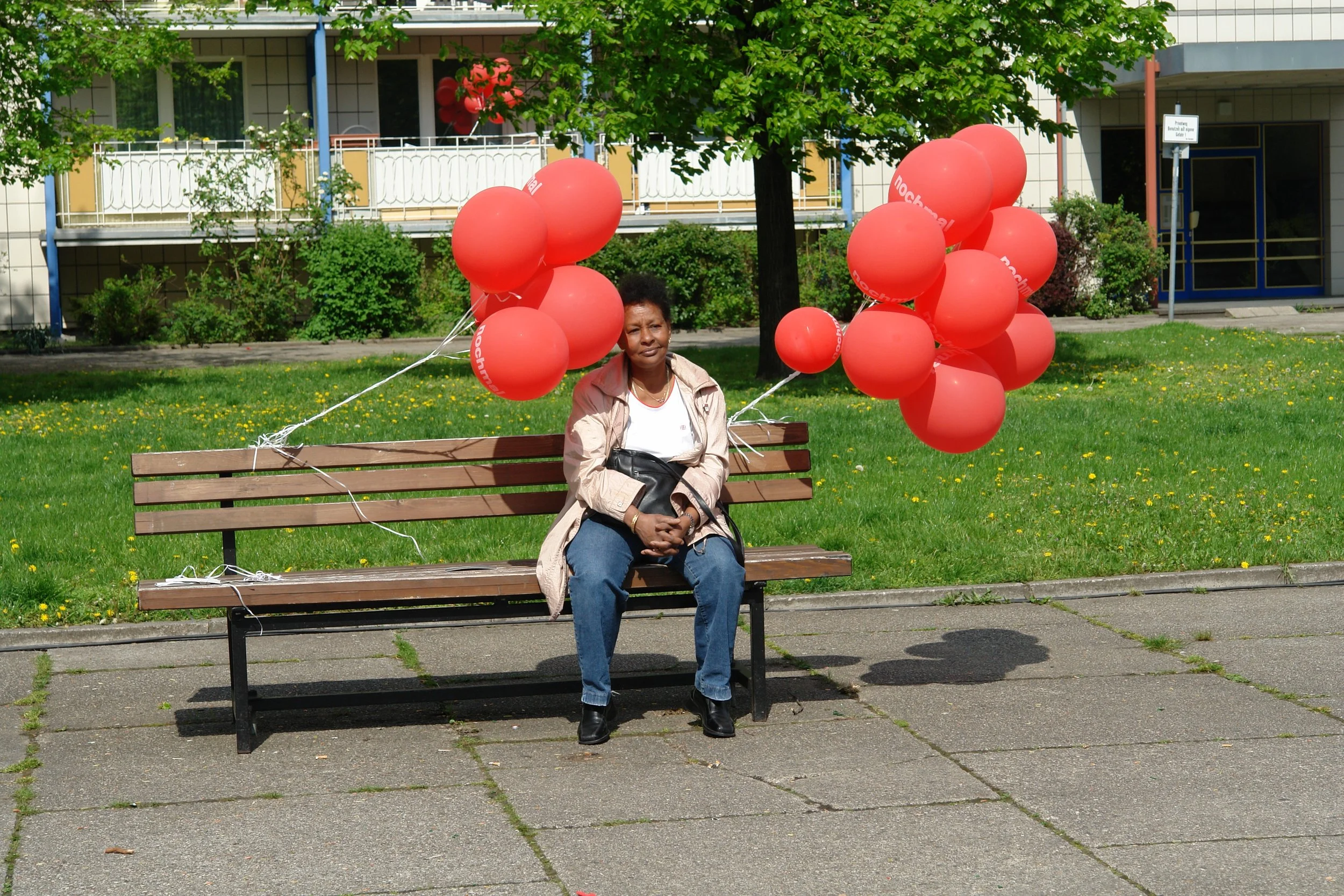
Locals approached the stage and picked up helium balloons printed with the words NOCHMAL and fixed them to their own balconies. Recordings from speeches given from 1960 to 1989 were played at the front of the stage. Pedestrians climbed up onto the stage and listened to the speeches. Older people revisited memories, but younger people who had never experienced such parades were drawn by curiosity. Some locals even flew their old DDR flags out their windows. With no obvious political function, NOCHMAL appeared as a melancholic statement, the entropy of a global celebration day—a ghost from a dead ideology. For a brief moment, the architecture of Karl-Marx-Allee responded to its origin.